I love etymology, which is the study of the origins of words. I’m fond of languages and linguistics in general, so that makes sense.
Sometimes my ‘folk etymology’ antennae twitch when someone gives an unlikely-sounding explanation for how a word came to be. Dodgy folk etymologies sometimes rely on proper names (e.g. marmalade is from “Marie est malade”- which it isn’t) but some real etymologies actually come from proper names, and can be quite surprising. So here’s a list of a few of them.
Mentor
This word isn’t derived from someone’s name, it just is his name! This was the inspiration for the blog post, when I was mentoring someone who was going off to be a missionary. I mentioned to her that I thought “mentor” was just a bloke’s name, looked it up in my trusty Oxford Classical Dictionary, and yes, it was.
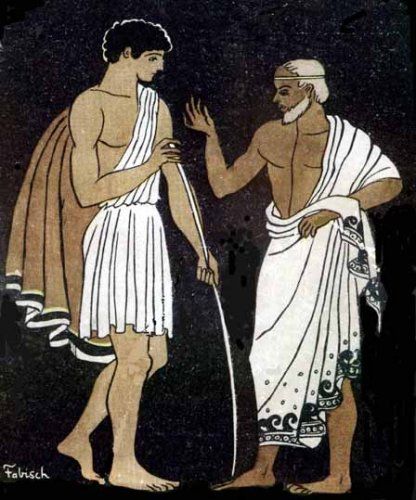
In Homer’s Odyssey, Mentor was a friend of Odysseus who looked after Odysseus’s son Telemachus while Odysseus went gallivanting around the Mediterranean. He was an older, wiser figure who guided someone younger and less experienced. He was, in other words, his mentor.
Dunce
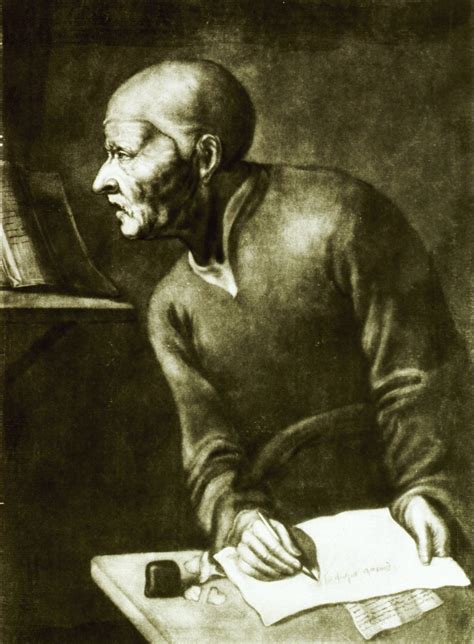
This is a bit of a sad one. John Duns Scotius was a brilliant thirteenth-century theologian from Duns in Berwickshire, Scotland. He was known as “the subtle doctor” and considered to be on the same kind of level as Thomas Aquinas and William of Ockham (of razor fame).
But when his kind of hair-splitting philosophy fell out of favour after the Reformation, those who still followed his methods were considered stupid and called Duns men – or later, just dunces. So this word for a stupid person comes from the name of an extremely clever person. What a way to be remembered!

Cravat
Cravat used to be an alternative word for Croat, a person from Croatia. In the 17th century, Croatian mercenary soldiers in France used to wear a distinctive scarf. So the wide, loose type of tie that is tucked into the shirt, which resembles this scarf, is called a Croat = Cravat.
Marathon
I’m talking about the 26-ish mile running race rather than the old name for a Snickers. I daresay the bar was named after the race rather than the place, for it is indeed a place.
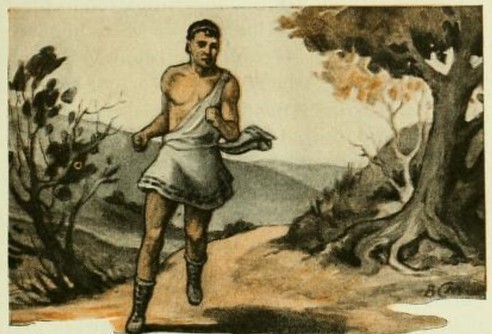
Marathon is a place in Greece situated 26-ish miles from Athens (or at least it was at the time – Athens has got a good deal bigger since then). In 490BC here was an important battle there during the Persian Wars, which the Greeks won. The defeated Persians then tried to sail up the coast to Athens and take them by surprise, but the Athenian troops made it back in time to protect the city. According to legend, a man called Pheidippides ran all the way back from Marathon to Athens in record time to tell the Athenians they had won the Battle of Marathon. Anyway, when the marathon race was introduced in the 1896 Olympics, both the name and the distance were taken from this battlefield.
Hermetically sealed
This sounds as if it should come from a technique called hermetising or something, but actually it’s named after the mythical father of alchemy, Hermes Trismegistus (i.e. Thrice-Great Hermes).
Alchemists get a lot of scorn these days since we have ‘proper’ chemistry, but these early scientists discovered and invented all kinds of useful things, including the equipment to pursue their experiments – such as the alembic, the bain marie (also named after a person – Marie the Jewess, an alchemist from Alexandria) and an airtight seal – the hermetic seal.
Coach
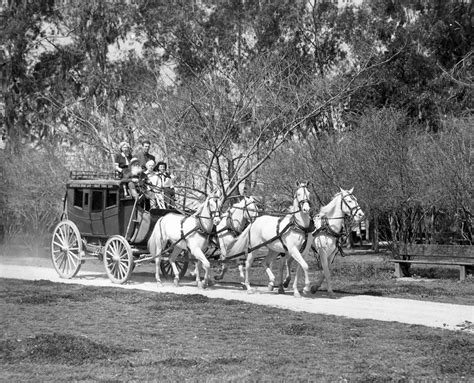
This is a really strange one. Every meaning of coach – from the various vehicles and parts of vehicles to the person hired to improve someone’s performance – come from the name of a town in Hungary. No, really.
Kocs (pronounced ‘coach’) was famous for its coach production from the fourteenth century AD. The name of the town became attached to the vehicle itself, and it’s clear enough how that could transform into part of a train or a fancy bus. But the expert who improves your performance? The dictionaries agree that this comes from a figurative use of the actual wagon-type coach. I can only assume it’s someone who figuratively carries you forward.
I did think about including the Marquis de Sade on this post, but decided to keep it family-friendly instead. But leaving aside dodgy Frenchmen, do you have any fun proper-name etymologies to add?


 K C Murdarasi
Leave a comment