Archive | Observations and musings RSS feed for this section

Singer Song of a Fiver

22 Mar

I feel another rant coming on soon (dogs, in case you’re wondering), so to avoid having two rants in a row and making you think I’m some sort of Mrs Angry, I’d like to stick in a wee paean of praise to my Singer sewing machine. I bought this little beauty for £5 at a jumble sale, hence the post’s title. I got it for a fiver because when the bloke selling it told me the price, which was £10, I replied,”Ten pounds?” incredulously, thinking “That’s so cheap!” He mistook my incredulity and said, “Ok, five pounds then.” I didn’t argue – I just called my husband to carry it home for me. (That’s what they’re for. That and killing spiders.)

The model I have dates from about the 1950s and is one of the earliest electric kinds, which is handy because I have never got the hang of a mechanical foot pedal. It is probably made of cast iron (although it feels like it’s made of lead), requires regular oiling,IMG_20130316_162536 and is painted pretty colours in that old Singer way. It came with an integral compartment full of useful bits and bobs, including an instruction booklet that smells very old. (I love the smell of old books. Especially 1960s paperbacks for some reason.)
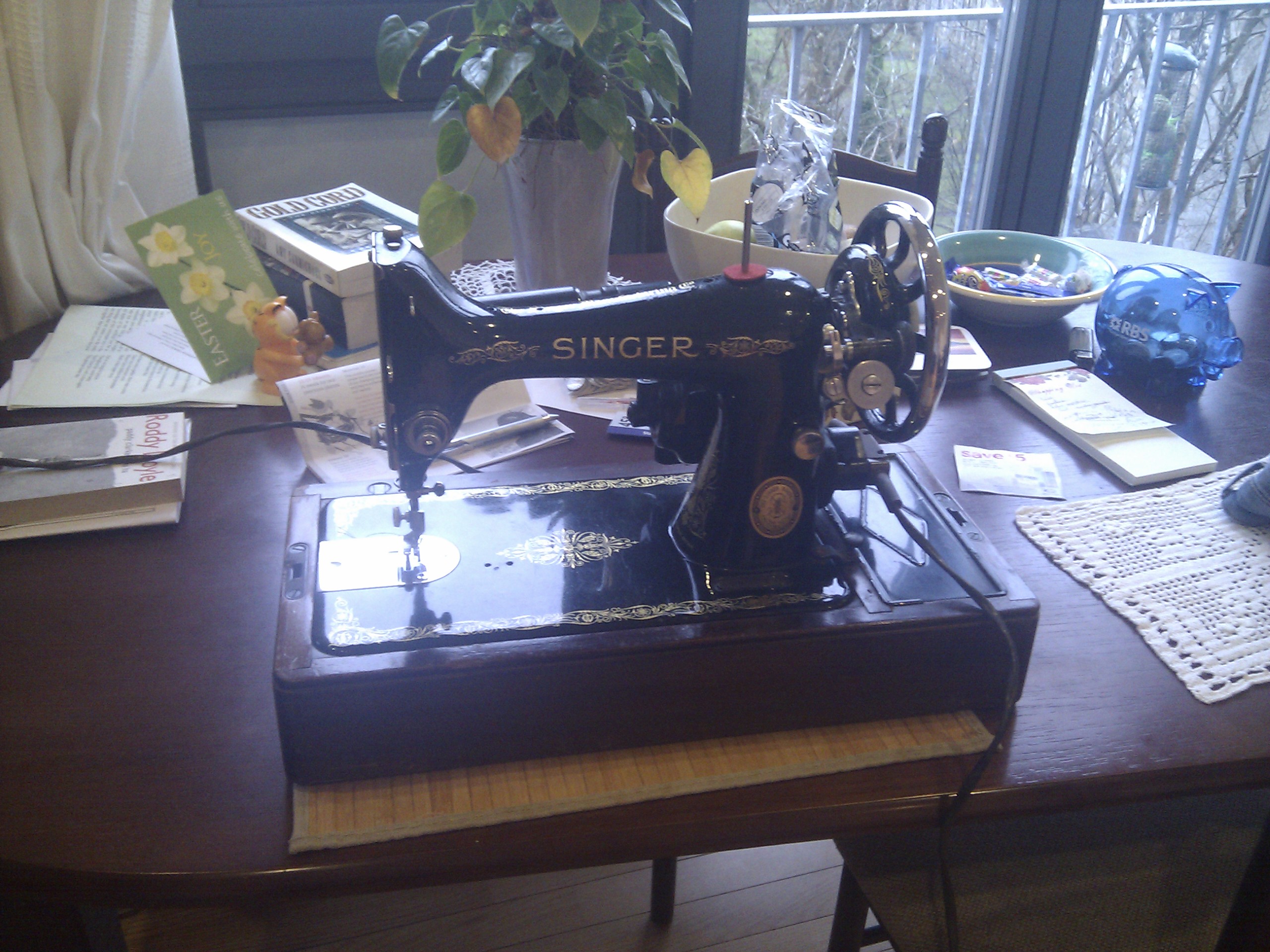
The Singer earned back its £5 layout the first time I shortened a pair of jeans. Since then, it’s been in profit. It’s also become more ambitious, moving on from just shortening legs to taking in waists, converting jeans to a skirt, and even producing an authentic(ish) Regency Period dress for a Jane Austen ball out of some sheets and pillowcases.

I’m not actually much of a sewer (no, really – crochet is my bag), certainly not a dressmaker, but despite that I have had reason to be glad of my purchase many times. And its sturdy carrying case even makes a handy additional coffee table. Probably the best five pounds I’ve ever spent.

Toilets I Have Known (on a scale of one to ten)

9 Mar
The Trainspotting Toilet - about a three.

The Trainspotting toilet – about a three.

I have a rather idiosyncratic approach to toilets – so much so that a friend suggested I share it on my blog. I’m not referring to the way I use toilets, which is entirely normal. (Athough really, in the privacy of the cubicle, who knows what is normal?) No, I’m referring to the fact that I award them a score on a ten point scale.

This is just public toilets, I should probably say. I’m not going into people’s houses, wrinkling my nose and saying, “No better than a six,” like some contestant on a lavatorial version of Come Dine with Me. However, when using a toilet in a public place for the first time you might well find me doing that.

This started as a coping mechanism in Albania. In the less developed parts of the world you are far more likely to find toilets that I would consider to be on the lower end of the scale, and using them can be quite a trying experience. To help, I would assign them scores, which is not only a distraction in itself, but also reminds you that it could be worse.

So what are the criteria for scoring well on the WC scale? It’s partly subjective, but here are some of the basic elements that score a toilet points: a door that shuts; a lock on the door; a light source; the ability to flush; toilet paper, and somewhere to dispose of it; water to wash your hands, preferably running; soap; a method of drying your hands; a hook (see my post on disabled toilets); a mirror; an inoffensive smell. Extra marks can be gained for having such luxuries as hand cream, aesthetically pleasing decor and floor-to-ceiling cubicle doors.

Some of these seem pretty essential, do I hear you say? You’d never find a toilet without them? Oh yes you would, and I have seen facilities missing all of these things, though usually not all in the same toilet.

So let’s examine both ends of the scale. Although in Britain you wouldn’t expect to find less than a 6 at worst, it takes something special to reach the perfect 10. Toilets in art galleries and beauty salons often score 9s or 10s, as do posh restaurants and hotels, but possibly the nicest I have ever seen is in The Blythswood Hotel in Glasgow. I may not like their attitude to ordinary working folk, but I can’t fault their toilets: a haven of peaceful salubriousness, with restful lighting, lovely fittings, and tiny single use hand towels that you throw in a basket afterwards. Bliss – definitely a ten.

What about the other end of the scale? What kind of a toilet scores just one? Are you thinking of the filthy loo in Trainspotting? No, that’s about a 3. Disgusting as it was, it had a door (that locked, I think) and sinks to wash your hands. The toilet in Slumdog Millionaire, then? Again, no. It had a door and someone to guard it. I think there may even have been paper. It would score at least 2. So is it possible to score only 1? Yes. I have seen the worst toilet in the world (I believe). It was in Albania, I think in Erseke though it may have been Leskovik. It was a hole in a concrete floor above a river. The room had three concrete walls; the fourth side was entirely open to the road, from where I observed it. I did not use it. That’s how you get a 1. So the next time the loo roll has run out or the hook is broken, think of Erseke, and be grateful.

Counting My Blessings

14 Feb
Christian Aid's "Count Your Blessings" programme

Christian Aid’s “Count Your Blessings” programme

I don’t remember Lent ever starting before Valentine’s Day before, although I suppose it must have happened. It’s not a very good arrangement, since I have lots of lovely choccies and a nagging feeling that I’m not supposed to eat them. I will quash that feeling, however, since I haven’t given up chocolate for Lent and a woman whose husband books a boys’ holiday over Valentine’s Day deserves all the chocolates she can get!

This Lent I will neither be giving up something  nor taking up something. Instead, I’m going to follow the Christian Aid “Count Your Blessings” programme. At least, I am when I get the leaflet back. I blithely left it at work for other people to see, since Christian Aid’s website assured me that an app was available. It is, but it won’t download onto my phone so it’s back to the paper version.

“Count Your Blessings” give you little daily facts about the developing world or conflicts and asks for tiny pledges of money every day or two. For example: “At the end of 2011, an estimated 42.5 million people were living in a place to which they had been forcibly displaced due to conflict or persecution. Give 10p for every year you have lived in your current home.” While we’re struggling with a horrible recession it’s easy to forget just how much worse off so many people in the world are. Although I said I’m not giving anything up, I am saying “no” to the occasional treat to balance out the pledges from “Count Your Blessings”, which again makes me aware of just how good life is for me.

Back to Valentine’s Day, and the e-book of Foreign Encounters from Writers Abroad is now available. This is a collection of stories about relationships, written by ex-pats or ex-ex-pats (like me), and profits go to a charity that provides books to schools in the developing world. This also requires a tiny pledge of money: £1.90 on Amazon, or $2.99 on Smashwords. Look out for my atmospheric little piece, “Sounion”.

One Year On

8 Feb

Roughly a year ago I gave up my boring office job and released my first novel, Leda. I intended to take stock after one year and see how the old writing career is going. So how does it look?

I would like to be able to support myself entirely by writing but that still seems to be a distant goal. As well as looking after my niece I’m currently back at the office, albeit only temporarily to cover staff shortages. (It seems I am indispensable. 😉

On the positive side, out of a print run of 500 copies Leda has so far sold over 350. I think that’s not bad for the first year (a Christian children’s publisher agreed) and sales are holding up steadily rather than tailing off. Someone, somewhere must be buying this book.

Then the best news of all: I have a book commission from the aforementioned Christian children’s publisher. All being well my children’s biography of St Augustine should be published in the early part of 2014. So I may still be skint, but at least I feel like I’m getting somewhere in my impecunious career.

Coincidentally, the weekend that I am looking back on my year is also Chinese New Year. For this reason my latest collection of short stories, A New Year’s Trio, will be free for Kindle download from now until Tuesday.

It’s also my seventh wedding anniversary in a few days, a significant milestone but more memorable for me than for my husband, it seems, since he accidentally booked a boys’ holiday to Spain over it. Oh well, I suppose there’s always next year.

Goodbye 2012

31 Dec

So this is Christmas, and what have we done? Another year over, and a new one just begun.”

(from Happy Christmas (War is Over), in case you hadn’t guessed.)

I’m in a reflective mood, what with it being Hogmanay. As a Scot I can’t help but think about the year that’s passed and the year to come, even though I know that all the gradations we put on time are just human constructs, and nothing significant really happens at midnight tonight. Still, it feels significant, and I think human beings need to break time up somehow, if only to give the illusion of a destination, of starts and finishes and progress in-between.

For the last few years I’ve been very glad to let the old year go, hoping that the new one would hold better things, and for the last few years I’ve been disappointed – until this year. This year has been good. It started off well, with my knowing that I was leaving my job, which I intensely disliked, to write full-time and look after my beautiful niece. It went on well, with the successful launch of my first novel, Leda (350 copies sold to date, not counting ebooks), and later a collection of short stories, Office Life and Death. I’ve evenA New Year's Trio just published another short collection specifically about New Year, A New Year’s Trio.

My husband has also become self-employed this year, and he’s enjoying it too. Financially it’s been a difficult year (Will this recession ever end? Not if George Osborne has anything to do with it, but that’s another story.), but personally it’s been great. A post from Read to Awake, which I follow, asked “what can you do now that you couldn’t do this time last year?”  I think that’s a pretty good viewpoint to take. This year I can play the tin whistle (not well, but I can knock out  a recognisable tune) and translate passages of Virgil’s Aeneid. That’s enough in itself to make me feel that I’m not stagnating.

I’m entering 2013 with mixed feelings, however. This year my sister goes on maternity leave, removing the steady income from babysitting which has made it possible for me to give up my job and write. Come the summer, things will have to change in some way, and as yet I don’t know what shape that will take. For the first time in a long while I’ll be sorry to say goodbye to a year. Twenty twelve brought me independence, hours of fun with my baby niece, creative success and lots more. Even the Olympics turned out to be pretty good, and it was the 100th anniversary of Albania’s independence (from the Ottoman Empire, since you ask).

Still, although 2013 is the unknown, I don’t think there’s any reason to fear it – and even if there is, I choose not to. Wherever I go, I go with God and with the support of my friends and family. I hope I’ll be just as sorry to say goodbye to 2013 in twelve months time.

“The year is dying in the night. Ring out, wild bells, and let him die.”

In Memoriam, Tennyson

Nature and Nurture

15 Dec

Pink Nail PolishHave I created a monster? (Although if I have she would be the cutest, most adorable kind of monster you could imagine.) My 21-month-old niece is the girliest girl possible, and I fear I may have a lot to do with it, since I look after her three days a week and she sees me putting on makeup, using various lotions and potions, wearing high heels etc. She insists on copying me, putting on pretend make-up and real hand cream, and picking out high-heeled shoes for me to wear even when the weather, and carrying a two-stone toddler, would make them quite impractical. She loves playing with my handbag, which keeps her amused for minutes on end. (That’s pretty good, with a one-year-old.)

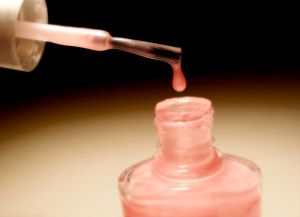
But I don’t think I deserve all of the blame for this. Her mother would have to take a portion too, since my niece often comes to my place smelling of mummy’s perfume and dressed in very cute outfits, but that’s not what I mean. I don’t think this girly obsession is entirely due to her upbringing at all. I think pink blood runs in her veins, so to speak. I know it’s easy to fool yourself that you’re not imprinting gender stereotypes on your kids when in reality you are, without realising, but I have good evidence that there is something deeper. For instance, she’s obsessed with handbags, and often goes after other people’s on the train (I really must train her as a pickpocket). She’s also fascinated with painted nails. Now I rarely paint my nails and, as I’ve written before, I’m just not that into handbags. She’s not getting that from me, and I don’t think she’s getting it from my sister, either.

The thing that decided me, though, was watching her with my husband yesterday. She adores her uncle, and follows him round watching what he does – but she doesn’t copy him. She doesn’t want to put shaving foam on her face or gel in her hair. When I use deoderant she’s after me for the bottle to pretend to spray it herself, but when he does, she’s content to watch. (So am I. He has the body of a Greek god.) In other words, she knows she’s female without being told, and knows that mummy and I are too, so she models herself on us and other women. This is not conditioning, this has to be inbuilt.

Actually, she’s not as much of a girly girl as this post makes her appear. She’s also quite tough and loves being tossed into the air or chucked on the bed, and as well as handbags she likes to carry all sorts of other bags and containers, some of them very heavy. She’s also taken recently to sticking her finger up her nose, which I consider very unfeminine. Of course, children go through phases and in ten years’ time we may be laughing at the fact that she was every girly. She has a baby sister on the way now, so it will be interesting to see how that affects things, for both of them. In the meantime, I’ll just keep a wary eye on my blusher.

Amazing Adverts

22 Nov

As a balance to the last post about annoying adverts, here is a list of the top five adverts of all time.*

5) Google Superbowl Advert (2010)

I had to be persuaded to put this one on the list, since it’s by an evil multinational conglomerate, and it’s probably never even been shown in Britain (I stand open to correction), but when I agreed to watch this it did make my eyes go a little moist. It’s sweet, and true, if you know what I mean. It deserves a place.

If I hadn’t put the Google ad in, it would have been the John Lewis ad in which a baby girl grows up until she’s a grandmother. It’s lovely, if only because of the Billy Joel song backing it.

4) Irn Bru Snowman (2006)

This is quite a recent advert, but very funny. The visuals are just like the film “The Snowman”, and so is the angelic choirboy’s voice. The lyrics aren’t. “Now I’m falling through the air, I wonder where I’m going to land. He nicked my Irn Bru and let go of my hand.” It’s The Snowman if it had been set in Glasgow.

(A note of interest for those readers not from round here – this advert shows cartoon versions of many famous Scottish landmarks, including ones from Glasgow, and the boy actually lands in George Square in the centre of Glasgow.)

3) Boddingtons – The Cream of Manchester (1992)

Dusk. Plush surroundings. A beautiful woman in a black cocktail dress applies white cream to her face while a voiceover tells you how luxurious it is. Then we see it’s beer foam. A suave man in a suit comes in, embraces her and bursts out, “By eck! You smell gorgeous tonight, petal!” in a broad Northern accent. I think it works because there were plenty of Milk Tray and perfume adverts that looked much the same, so you really didn’t see it coming.

2) Batchelors Mushy Peas (1994)

This is how Batchelors make peas mushy: They get Craig Charles to talk to them about the good old days, back on the farm. Cruel, but funny. (A word of warning about the link – there is other stuff before the Batchelors ad. The advert itself starts 28 seconds in.)

1) Clarks Magic Steps Shoes

This is a magical blast from the past. I think this advert is from the 80’s. It absolutely hooked the target audience – wee girls, of which I was one at the time. It was probably about the same time as the film “Labyrinth” was around, and it goes for the same normal-girl-in-magical-world conceit. To really understand the appeal of this ad, though, you have to watch it and then consider this fact: the shoes actually had a key in the sole! This advert has stayed with me for many, many years, and deserves first place in my little list.

* These adverts have not been selected in a scientific way and may not actually represent the best five television advertisments of all time. Please do not complain to the Trading Standards Authority about this post. Instead, complain about those Channel 4 “Top 100” programmes where the best item is always at number 2, while number 1 is some piece of drivel.

The Consolations of Growing Up

23 Oct

Last week I unwisely finished reading The Graveyard Book by Neil Gaiman shortly after watching the end of Peter Pan (2003) on TV. Both of them have bittersweet endings involving the hero or heroine growing up and leaving behind friends or family who are unable to join them – either because they are ghosts (in the case of The Graveyard Book) or because they are Peter Pan, and have vowed never to grow up. Both of them left me in tears – although, to be fair to myself, I had been working rather hard, feeling stressed and staying up too late, which can make anything seem worth crying about.

Absorbed in quick succession these works can leave you feeling that “to grow up is such a barbarous business”, that growing older is not just a tragedy but also some kind of failure, as if every year you allow to slip by is a betrayal of the happiness of your youth. For me personally it doesn’t help that I’m approaching a milestone. Not that this is your average milestone, mind you. I’m not turning thirty or having a child or anything, but I will soon be older than Alexander the Great ever was. That probably means nothing to you but I’ve idolised him since I was 17, and now that I’m about to outlive him (barring accident), it’s impossible not to notice that he achieved more with his life by this point than I have.

Fortunately, I have an excellent antidote to all this morose calendar-watching. I am currently studying the life of St Augustine, another towering figure from antiquity who, like Alexander, suffers a lot of misunderstanding and bad press. Unlike Alexander, though, Augustine spent quite a lot of his youth faffing around, getting into trouble and wondering what it all means. It wasn’t until he was about the age that Alexander died (incidentally also about the same age that Jesus died – a strangely significant age, apparently) that he surrendered to God, pulled himself together, and made something of his hitherto pointless life. He went on to write some of the greatest works of Christian literature and to use his remarkable rhetorical powers trying to bring unity to the church and godliness to people’s lives. He lived to be 75.

Most of us don’t achieve that much with our early lives. Although there are always exceptions, like Alexander the Great, Pitt the Younger and Premiership footballers, most of us are just getting started by the time we’re thirty – which is fine, because there’s a lot of life still to come. In fact, much as we may look back with fondness on the “blue remembered hills” of our childhoods, we tend to get better at almost everything with age. Adults are more skillful than kids. I find I can knit better than I could as a child, translating Latin has mysteriously become easier (although it’s still extremely hard), and don’t even get me started on child actors or (shudder) children singing.

In fact, it’s not even clear if the sadness in Peter Pan is that Wendy must grow up, or that Peter never will. Their separation is caused by the combination of those two factors, not by one or the other. So I will be sad to overtake Alexander and leave him behind me, eternally youthful, but perhaps more for his sake than mine. After all, getting older might sometimes be pants, but it’s better than the alternative.

Trendy Tots

4 Oct

Yesterday I saw a beautiful dress. It was a lilac-grey jumper dress with bands of lace. It’s very on-trend and would probably suit me. Normally if I really liked an item I would ask the wearer where she got it, but in this case the wearer was my one-year-old niece. Even if she was able to tell me what shop it was from, they probably wouldn’t do it in my size.

I am not the only one who has noticed the astonishing change in baby clothes since I was a baby myself. I don’t actually remember what I wore as a baby, of course, but going by things I remember wearing as a small child – hand-knitted jumpers and cardigans, dungarees, endless hand-me-downs – I don’t think that I was being wheeled around in my pram in brand-name jeans.

These days kids have a much bigger range of clothes to choose from, although they are not usually the ones doing the choosing. It’s not just my niece. The new pastor’s son (aged one) looks the epitome of cool in his jeans and hoodies, while my nephew (also aged one) could easily swap clothes with my husband (not aged one) without anyone noticing anything amiss, apart from the difference in size. (Truth be told, there’s not that much difference in size, actually; my nephew is huge for his age.) I’ve even seen a tiny girl on the train with a top-end brand-name scarf (I think it was Prada), which just seems silly. Surely Asda tastes just as good as Prada?

It’s easy to disapprove of the money wasted on these clothes, particularly the expensive brands, when the kids will only grow out of them, but while there’s logic in this, I think there’s also a bit of jealousy. “We had to wear scratchy, hand-me-down woolens, how come they get Next dresses with cute stripy tights? Let them suffer too!” Not a very attractive, or very fair attitude. Some of the new baby clothes aren’t any more expensive than the ones we wore, anyway, it’s just that manufacturers make them in line with adult fashions now, which for some reason they never used to. And a major point in their favour is how cute the kids look in them. Grown women squeal and sigh over my niece’s wardrobe, and how adorable it makes her look. (Not that she wouldn’t look adorable anyway. She is related to me, after all.;))

On balance I think I like the trend for trendy tots. Their baby photos will be less embarrassing to them in the future, and in the meantime it’s fun to dress them nicely. There’s just one thing that would make my approval complete: an enlarging machine, like on Honey I Blew Up the Baby, so I can have the lacy dress when my niece has finished with it.

Understanding Karenina

11 Sep

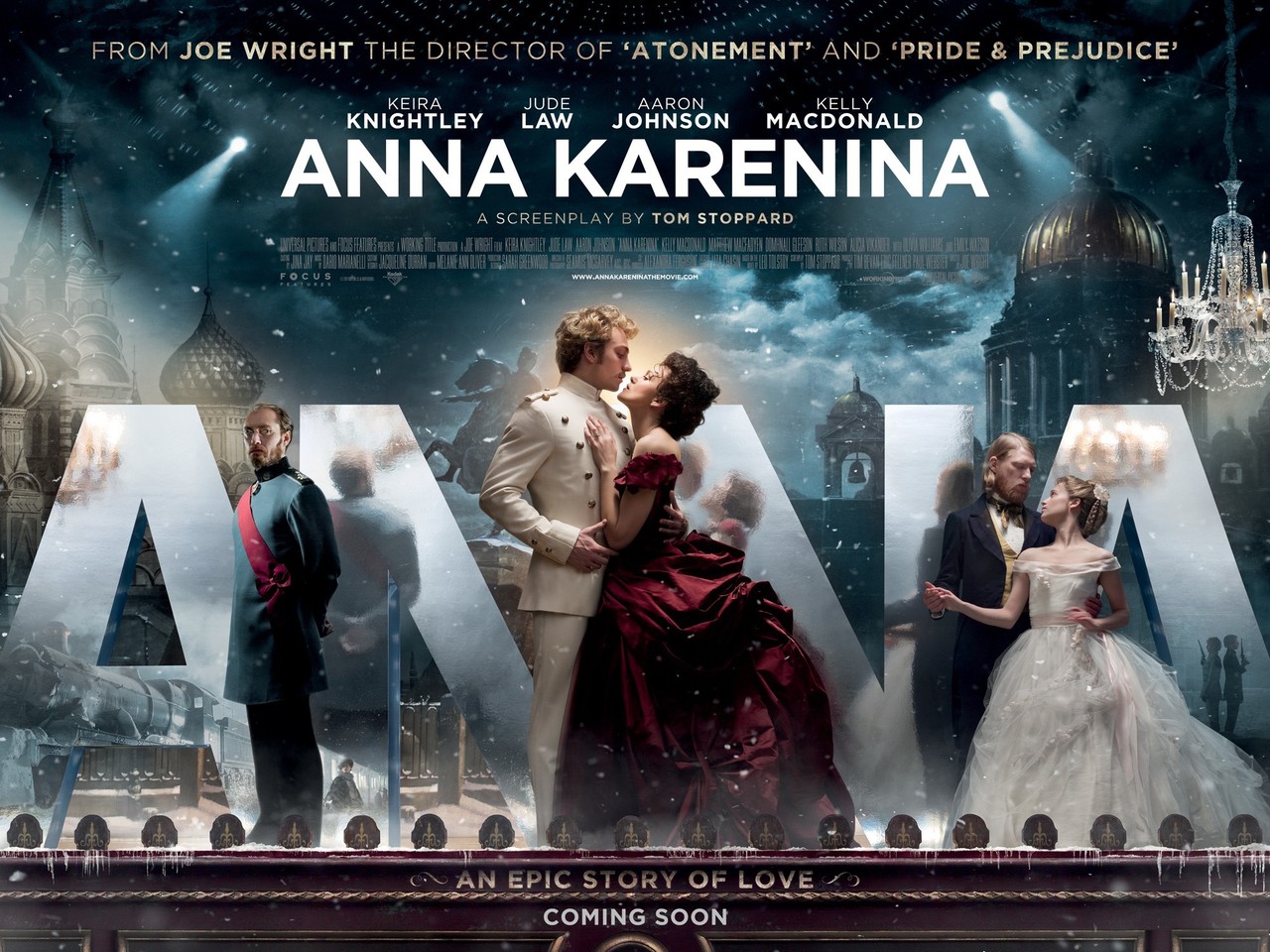
Last night I went to see the new film of Anna Karenina, adapted by Tom Stoppard. I had read the novel, but it was a good few years ago and going into the film I was carrying around the thought that Kitty was “young” and Anna was “old” – not old old, of course, not in need of a walking frame, but middle-aged. After seeing the film, and through it remembering the book, I realise that I was wrong. Anna is not old, even though Kitty is a good decade younger. She has been married for many years, yes, but she was only 18 when she got married. What Anna is, is an Older Young Person.

I use that phrase as if it’s an official description because, at my church, I sometimes put on events for Older Young People. It’s a category that’s not well-defined, but which I fall into myself. At the lower end it includes people who really are very young, in their early twenties, but who are no longer students and have therefore outgrown the previous stage of their life and been replaced by new models rolling in for Freshers’ Week. At the top end are those who have proper jobs and houses and so on, and have had for some time, but still sometimes feel like they’re not ‘proper’ grown-ups; people who notice, with incomprehension, that there are folk ten or fifteen years younger than themselves who can drive, marry, drink alcohol, seek gainful employment (though finding it is rarer these days), and in most other ways appear to be functioning adults. We are still young, but no longer obscenely young. This is the Older Young Person.

Now that I am a few years older than I was when I read the novel, I understand Anna a lot better. She didn’t want to hurt Kitty, of course, and even felt protective of her, but the ability to turn Vronsky’s head when that part of her life was supposed to be behind her was intoxicating. It wasn’t just Vronsky’s good looks and charm that tempted her, it was being seen as an attractive woman in her own right, not someone’s wife or mother or aunt. The kind of person who might dance at a ball. The kind of person who might embark on a love affair. A young person.

I don’t have to cope with a stale marriage, nor have I ever found myself infatuated by another man since I met my husband (for which I thank God), but for all that I know a little of what Anna was going through. She was beautiful, may even have become more beautiful with age, but she had lost the dewy glow of youth that Kitty brandished so innocently, and no amount of BB cream can ever give you that back. She had made her choices, and they were good ones, but the thrill of having life choices to make is so much more exciting than the satisfaction of having made them. Kitty’s rival was another woman, but Anna’s rival was time itself, and that’s a much scarier adversary, because he always wins in the end.

I’m rather pleased (and not a little surprised) that the new film does leave in all the moral censure that gives the story of Anna Karenina its point; what Anna does is understandable, but like many understandable things it’s also very wrong. So while I may look in horror at the dates of birth of some of my younger friends (how can someone born in the 90s even tie their own shoelaces yet?), I won’t be embarking on a torrid affair with a young cavalry officer. Instead, I will invite my Older Young friends round for dinner and laughs. And refuse to tell anybody under 25 my age.