Why did the general cross the Rubicon?

4 Jun
alea 2

“The die is cast” – Julius Caesar’s words as he crossed the Rubicon

Recently (ok, not that recently – I’ve been busy) my cousin and fellow author posted on Facebook that a Rubicon had been crossed because he had taken his sunglasses out of the drawer. If you’re reading in a sunny country, understand that this is a bigger deal in Scotland. A friend of his replied to ask what on earth a Rubicon was, and I suppose the question was fair enough, because these days the name Rubicon is more likely to be used of tropical drinks than of a geographical feature in northern Italy.

The short answer to the Facebook question is that the Rubicon is a river, and crossing the Rubicon means passing a point of no return. Two minutes of googling can tell you the reason that crossing a Rubicon means passing a point of no return (and indeed the origin of “point of no return”, which is one of a surprising number of expressions from aviation), but as it’s an ancient history thing, I thought I might weigh in, albeit far too late and on a different media platform.

Thousands, probably millions of people have crossed the Rubicon, which is thought to be the river Fiumicino (meaning, imaginatively, “little river”), but the significant moment was when Caesar crossed it in 49BC. It was the start of something and the end of something, a definitive moment. It was in some ways like the shot that killed Franz Ferdinand. Months and years of manoeuvring to avoid a particular scenario, and then one action revealed how the manoeuvring had actually made that same scenario near inevitable. With Franz Ferdinand’s assassination it was the First World War; in Caesar’s case it was the end of the Roman Republic, leading to half a millennium of autocratic rule by emperors. (The Roman Republic was, you see, technically a democracy, although as in the case of Athens, “birthplace of democracy”, hardly anyone could vote, and at Rome it didn’t make that much difference when they did. Much like modern Western democracy. But I digress.)

The point about crossing the Rubicon was that it marked the boundary of Italy at that time. A general in command of an army was not allowed to just march his army into Italy, for obvious reasons of public safety and avoiding coups. If you raised an army in Italy, or brought one with you into Italy, you were revolting against Rome (except in particular circumstances which don’t apply in this case and which we won’t go into here). On the other side of the Rubicon (which was not a particularly formidable river, by the way, more of a brook – hence, Fiumicino) was Gaul, where Julius Caesar was quite legitimately commanding an army, for the purpose of attacking, killing and enslaving Gauls and Britons. That might not sound very nice if you were a Gaul or a Briton, but it was the sort of thing Rome heartily approved of.

So when Caesar crossed the Rubicon he went from being an astoundingly successful Roman general to leading a revolt against Rome, and there was no going back from that. Catiline had done something similar a decade and half earlier, and it had not ended well. But Catiline was in debt, accused of all sorts of crimes, and couldn’t get anywhere in politics, whereas Caesar was rich (from all the plunder), enjoyed legal immunity because of his military command, and was one of the two most powerful men in Rome. So the more interesting question is not “what does crossing the Rubicon mean” but “why did Caesar do it?”

To understand that you have to at least dip your toes into an extremely confusing period of history. I am currently writing a novel set during the Roman civil wars of the first century BC (The Gates of Janus), so believe me when I say it is fiendishly complicated. What follows is my attempt to make Caesar’s situation easily comprehensible without over-simplifying.

The three most powerful men in Rome around the middle of the first century BC were Julius Caesar, Pompey and Crassus, and in order to increase their power they had made an informal alliance, which we usually refer to as the First Triumvirate. Caesar was a brilliant general who was popular with the common people. Pompey was a brilliant general who was popular with the upper classes. Crassus wasn’t half the general they were, but he was staggeringly rich (we say “as rich as Croesus, but we could justifiably say “as rich as Crassus” instead), which made him popular with anyone who needed funds. This arrangement sort of worked and kept the power in Rome balanced between them, staving off the threat of dictatorship, which was what everyone was worried about (especially since current politicians had lived through Sulla’s dictatorship). Unfortunately Crassus died in a disastrous war with Parthia (Persia, more or less), and Pompey’s wife, who was also Caesar’s daughter, died in childbirth. Now there was nothing holding them together, and the Senate (like Parliament) was worried that one or both of them would try to seize sole power.

Supporters of Pompey (or those who thought Caesar was the bigger threat) pushed through a bill on bribery which would allow people to be prosecuted for offences committed up to twenty years earlier. There genuinely was a problem with bribery in Rome, so a new law about it wasn’t a bad thing, but the backdating made it dangerous for Caesar, who had spent much of the previous twenty years bribing people to get into the position of power he now enjoyed. Of course, that was the whole point of the law.

Caesar was protected as long as he was a general in command of an army, but in 49BC his period of command was coming to an end. Pompey’s wasn’t. Caesar expected to be elected consul (similar to Prime Minister) for the following year, which would also make him immune, but there would be a tricky interim period during which he could be prosecuted. Caesar applied to have his command extended until he took office as consul. He was refused; many senators thought he was already too dangerous, what with his army, wealth and popularity with both the troops and the mob. One of his supporters (Caesar had bought his support – seriously, bribery was big in Republican Rome) suggested that Pompey could lay down his command early, at the same time as Caesar, to even things up. Pompey said he would – but didn’t actually take any steps towards doing it.

Suddenly a rumour went around that Caesar had already entered Italy. Caesar’s bought man in the Senate assured them it was untrue, but the current consul ordered Pompey to gather an army to oppose him anyway. Caesar (still outside Italy) said he would give up most  of his his troops and territory, keeping just a little bit so he still had immunity. Pompey was happy with that, but the Senate refused. Finally Caesar said he would be willing to lay down his command at the same time as Pompey, but if Pompey kept his command, he would “avenge his country’s wrongs, and his own.”

By now, even though no blow had been struck, Caesar was officially at war with Rome. He was declared a public enemy, Pompey was declared the protector of Rome, and Caesar’s supporters were driven out of the Senate ‘for their own safety’. Even so, when he came to the Rubicon, he still paused. Yes, he was an enemy of Rome, and Pompey was gathering an army against him, but no blood had been shed yet, and politicians could change their minds; Caesar’s friend Mark Antony would later be declared a public enemy, but go on to rule half the Empire.

“If I stop here,” Caesar reportedly said, “it will be the beginning of misfortune for me; if I cross, it will be the beginning of misfortune for all mankind.” So, being as selfless as most military dictators (or for that matter, most people), he crossed.

The rest is history. But in case it’s history you’re unfamiliar with, here it is in a nutshell: Caesar wins and becomes sole ruler, but in a semi-constitutional way. Then he is assassinated, the Empire descends into full-scale civil war, and in the ensuing chaos Julius Caesar’s heir, Octavian, increases his power base and eliminates his rivals until he is supreme leader of Rome in a very unconstitutional way. By the time he dies he is the Emperor Augustus, founder of a new dynasty.

So that’s why crossing the Rubicon is a big deal, much like breaking the summer clothing out in Scotland. By the way, an interesting fact that I discovered when doing some research for this post (yes, I do carry out research for blog posts – is that so surprising?) is that Rubicon tropical drinks are also named after Caesar’s crossing. The founders of the company left their secure jobs to start the venture, and there was no going back. Caesar may have been a dangerous man, but he had a sense of humour; I like to think he wouldn’t mind having a can of guava juice named after the most momentous decision of his career.

Good Friday Thoughts

25 Mar

Good Friday is an odd one. It’s very solemn and sombre for Christians because we’re essentially pretending (by way of memorial) that Jesus is dead, even though we know that he has been risen for some time now. It’s an opportunity for ecumenical events (meaning joint with different kinds of churches), during which people tiptoe awkwardly around the fact that they know very little of their companions’ practice of faith or the vocabulary that accompanies it (communion/Eucharist/mass/Lord’s Supper; priest and clergy vs minister and leadership team etc.), even though it’s the same faith they’re practising. At post-service snacks, some enthusiastically scoff hot cross buns while others, who are fasting, quietly don’t. A strange time, but a bit of disorientation can be good to snap you out of your usual life and help you remember what this Easter lark is all about, anyway (and it’s not chocolate bunnies or the Babylonian goddess Ishtar, as a historically and etymologically illiterate Facebook meme would have us believe).

It’s an even stranger one than usual this year, because Good Friday (the memorial of the crucifixion) lands on the same day as the memorial of the Annunciation (when the angel announced to Mary that she would give birth to Jesus), meaning that (if you’re in a church that takes note of these things) we’re celebrating Jesus’ arrival as a baby whilst also mourning his death. I had only recently found out about the tradition that the Annunciation and the crucifixion were both on 25th March (to keep things nice and neat), so it’s quite serendipitous for me that in the year I find this out, the memorial of the crucifixion (which depends on the lunar calendar, thus a literally moveable feast) falls on the anniversary.

(There’s also a superstition that their coincidence is supposed to presage national disaster, such as the death of a monarch. Given how many famous people have already died in 2016, that wouldn’t be terribly surprising – but let’s hope it’s only as true as superstition usually is.)

Anyway, the article that drew my attention to this nice syncronicity is very well written and interesting, with lots of lovely pictures and (if you keep going to the end) a brilliant poem by John Donne called, rather unimaginatively, Upon the Annunciation and the Passion Falling upon One Day – so I will simply link to it so that you can enjoy it:

This doubtful day of feast or fast – Clerk of Oxford

Happy Easter!

Happy St Patrick’s Day!

17 Mar

I don’t usually observe St Patrick’s Day, not being Irish, but I feel that I should pay a bit more attention to it this year, since this is the first 17th March since my book Patrick: The Boy Who Forgave came out.

It’s actually tomorrow that I’m doing something for St Patrick’s Day / week – giving a talk about the historical St Patrick. It will be an invigorating jog through ancient history, if you like that sort of thing, and if you don’t like that sort of thing, at least it will be short and free. It’s at the Govanhill Neighbourhood Centre at 7pm, and I’ll be available for book sales and chat afterwards. There may even be a post-talk sojourn to a drinking establishment, if one can be found. And while Pat himself might not have approved of that, I am led to believe it is traditional at this time of year 😉

The Stay-at-Home Missionary

28 Feb

It’s not often that I am moved to blog about a sermon I hear at church (though it does occasionally happen). Today we had a visiting speaker, Aaron Elder (who, despite his name, was almost unbearably young), and some of the things he said particularly struck me. That makes it sound as if our regular pastor’s sermons are not striking, which is unfair. They are often excellent, usually challenging, and if they suffer from using the phrase “what would it look like” more often than is warranted by normal use of the English language, well, so do Aaron’s. But maybe I was just ready to hear what Aaron had to say today – or, more accurately, what God had to say through him, because in any really good sermon the mouthpiece fades into the background.

Anyway, Aaron’s sermon was mainly about missionaries, and how we are all supposed to be missionaries. He dropped in some quotes by big hitters (he was almost apologetic by the time he invoked Kierkegaard; I was ready to cheer) and one of them was from Charles Spurgeon:

Every Christian is either a missionary or an imposter.

Of course this is hardly a new concept. I’ve heard any number of times the idea that we can’t all go abroad to be missionaries, but we can and should all spread God’s message of love where we are. I probably have a slightly different angle on this from most people, having been a missionary abroad; when asked what our mental picture of a missionary is (as a precursor to telling us we’re all missionaries), I think about my former friends and colleagues – although I have to admit that this image fights for space with the stereotypical image of a middle-aged woman in sensible clothes and besandaled socks.)

Anyway, when we were all being encouraged to think of where our ‘mission field’ is, I was, not for the first time, thinking “I don’t have any colleagues. I don’t have many friends, and many of the ones I do have are overseas.  I see my neighbours rarely. I don’t have a mission field.” Most people have to deal with a lot of people every day, whether they want to or not, but my work is just me and a computer, and that’s the way I like it. Even when I’m interpreting Albanian, I’m only supposed to be a human version of Google Translate (albeit a more accurate one); I’m not allowed to interject my own thoughts, any more than a Babel fish does.

However, while I indulged in this none-too-positive thinking, God* suddenly drew my attention to the fact that in a few weeks I’ll be speaking to over 200 people about St Patrick. In the week of St Patrick’s Day I’m visiting a school, talking to the whole of S1. Then I’m giving a talk on “Who was the real St Patrick?” at Govanhill Neighbourhood Centre the same week, on Friday 18th March. Neither of these talks are going to be evangelistic – I’m not luring people in and then preaching hellfire and damnation. But I will be speaking about another missionary, good old Pat, and mentioning why he went off to serve the Irish – which was of course because of his belief in God, and that God had sent him.** So while I may not have colleagues, or even many friends (don’t shed any tears, I do have some, and they are lovely!), I have a remarkably privileged opportunity that most people don’t get. Of course, I’ve also got my books, read even by people I’ve never met (so I’m told), so there’s a lovely, arm’s-length mission field – a Christian introvert‘s dream 😉

Where am I going with this? Nowhere really, except to observe that sometimes things can become new and fresh even when we’ve heard them a hundred time, and that perhaps even I have a mission field, even if it is limited in time, or extended in virtual distance.

__________________________________

*How do I know / why do I think it was God? It’s hard to be 100% sure when it comes to divine communications, but they do happen (if you’re a Christian), and they come in a number of different forms, from the unsettlingly supernatural to the surprisingly mundane. In this case, while mundane, the subject came to my mind unbidden, and in a completely different light from how I had seen it before, while I was in a prayerful, open attitude. That doesn’t prove anything, but I just thought I would explain since “God spoke to me” can be a rather confusing and ambiguous statement for the uninitiated.

** In his case it was a vivid dream in which he received a letter from the Irish – a little closer to the supernatural end of the scale.

Why Geneva was a Claude-free zone

17 Feb

Apologies for the lifeless nature of my blog recently. I could blame it on the weather, since the various storms seem to have disrupted everything else, but you probably wouldn’t believe that. The truth is I’ve just been too busy to even think up any pearls of wisdom, let alone write them down. I hope you are coping without them 😉

Anyway, there are a couple of pieces of news I ought to share:

  1. My article on John Calvin is out now in (Premier) Christianity magazine. Find out why it was a crime to call your child Claude in Calvin’s Geneva, and what predestination has to do with the birth of western capitalism, and all in under ten minutes. You can get Christianity magazine in Christian bookshops, online, and probably in larger newsagents. There’s also a readers’ survey in this edition, so if you’ve been enjoying the Ten-Minute Guide series (which I have written a few of), please vote for it as one of your favourites!
    Christianity-Magazine-March-2016-cover_cover_image
  2. I’ll be appearing at the Glasgow St Patrick’s Festival (yes, we do have one) on Friday 18th March at 7pm in the Govanhill Neighbourhood Centre. I’m talking about who St Patrick actually was, what he did, and how we know. Very ancient historian-y. Perhaps I should dig out my old university gown…? The talk is free, so just turn up on the night.

Hopefully I’ll find the time to write a new blog post at some point in the next month, but if not, you could try reading something I prepared earlier. With two biographies, one novel and several short stories, you should manage to find something to keep you going!

On the Nth Day of Christmas

4 Jan

Happy New Year!

WordPress very kindly made a review of my blogging year and invited me to share it with you. However, on the assumption that a list of statistics about my blog is probably more interesting to me than to you, I’ll instead share a wee bit of poetry taken from the start of my short story collection A New Year’s Trio (available on Smashwords Amazon etc.). This is extremely rare, since I write poetry only once or twice a decade. I hope you enjoy it, but if you don’t, at least I won’t be troubling you with any more poetry for a while. 😉

On the Nth Day of Christmas

That dayless week between Christmas and New Year

When it’s all over and it hasn’t started.

Finding space for new presents and new life,

Three leaving the stable that two had entered.

A pause, a plateau, an intake of breath,

Ready for the wheel to turn again.


Forgiving the unforgiveable

17 Nov

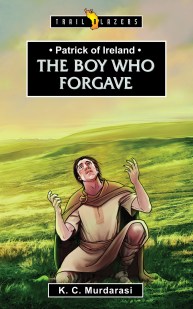
My new book on Patrick of Ireland is subtitled The Boy Who Forgave because what struck me most when I was researching his story was that Patrick was prepared to go back to the country where he had been trafficked and enslaved, not reluctantly or under compulsion, but with a heart full of compassion for the Irish.

The atrocities in Beirut and especially Paris have been all over the news and social media since Friday, and although the situation is not the same (the Irish raiders who carried Patrick off were no ISIS), I can’t help wondering how people would react if someone who had lost loved ones in the terrorist attacks then devoted most of their adult life to serving and spreading the word of God in the land the attackers came from. I expect that there would be some ready to question their motives, or their sanity. Our society tends to see forgiveness as weakness, but on the contrary, I think it takes immense strength, especially when it flies in the face of public opinion.

Patrick front cover

Anyway, all of that is just a prelude to saying that Patrick of Ireland: The Boy Who Forgave is now available in bookshops and online in Britain (you’ll have to wait a little longer in the USA) and tells a moving and thought-provoking story about a truly inspiring man whose life was anything but straightforward. Kidnap, shipwreck, near-starvation and attempted poisoning were just some of the things poor old Pat had to put up with, but his trust in God was unshakeable.

This is the stripped-back story of Patrick, relying on the most secure evidence and missing out the legendary bits that got added on much later. No snakes, shamrocks or breastplates, I’m afraid, but plenty of kings with unpronounceable names, druids, and high adventure.

Book launch

If you will be in Glasgow on Saturday 5th December, you are warmly invited to the book launch for Patrick of Ireland at 2pm in the private room of O’Neills Irish pub, Sauchiehall Street (right at the end of the street, almost at the motorway). If not, please do buy it from your local bookshop, buy online, or suggest to your local library that they get it in.

Kaleidoscope Anthology Published

12 Oct


Writers Abroad has just published their latest anthology, Kaleidoscope, to mark the International Year of Light. It features my fun little piece of flash fiction, ‘Lux Italiana‘ (Italian Light), and while I’m not going to pretend that half a page from me is worth the £5.99 cover price, there is also lots of other good fiction, non-fiction and poetry from various ex-pat and ex-ex-pat writers, and all profits go to the charity Room to Read, which promotes literacy in the developing world.

Kaleidoscope is available on Amazon and Lulu, and as today (12th October) is the launch day, there is also a Facebook event from 10am to 6pm with regular competitions and prizes, so pop over and have a look. And then buy the book, of course – if not for yourself, then as a (whisper it) Christmas present for any ex-pats or ex-ex-pats who are on your nice list.

The Great British Turn Off

31 Aug

I understand that the 2015 series of the ever-popular Great British Bake Off is now underway. Or will be shortly. Or was recently. I’m not exactly sure of the details because I have never been the least bit tempted to watch it. That’s not because I don’t like baking. In fact, I love baking and am well known amongst my circle of acquaintances for my excellent cakes and biscuits. I do so much baking that my little niece thinks “recipe” means “a book that tells you all the things what you need in a cake”. So why do I dislike the Bake Off?

Until recently, I explained that to myself and others by saying that it was the competitive element that put me off. Baking isn’t supposed to be a competitive sport, it’s an enjoyable pastime. When lots of people bring baked goods along to an event, the fun is in trying and enjoying all of them, not in declaring one the winner and rejecting the others. But that doesn’t really explain it. I mean, I don’t object to the kind of baking competitions where you make the goodies at home and then take them along to be judged. I’ve even entered competitions like that in the past before, and written a heart-warming, tear-jerking and fairly well-remunerated short story for a woman’s magazine on the subject.

I could say it’s the stupidity of baking in a tent. (You need a constant supply of water and electricity, and no wind blowing your icing sugar around so let’s hold it – in a tent! Ideal!) Or I could object to the hosts or judges. But actually my problem with it clicked when I read an article on introversion and it mentioned baking as an activity introverts can use to recharge. That’s it! Baking is a solitary, peaceful activity. If you make it into a big public thing, with everyone shouting and making noise and peering over your shoulder, it becomes a trial to endure, not a source of relaxation. My objection to The Great British Bake Off, it seems, is that I’m an introvert.

(As an aside, it’s also a slight quibble I have with the Macmillan World’s Biggest Coffee Morning. It’s an excellent cause, but I have to disagree with their statement that “cake tastes better together”. Cake most definitely tastes better alone.)

It’s normal for writers to be introverts – lots of deep thoughts, internal monologue and spending time alone with computers, paper, pens and books. (I love stationery – not sure if that’s connected.) But it’s not always easy to tell who’s an introvert and who isn’t, unless you know them well. I can be quite the social butterfly, in fact, meeting new people, remembering their names and making amusing small talk, but I couldn’t do it all day. In fact, if I spend all day with large groups of people, even people I like, I will be ready to burst into tears about nothing at all by the evening. I need time by myself to chill and recover, doing things like reading, watching TV, and baking.

The article that mentioned baking has a great explanation of introversion described in terms of mobile phone batteries. The basic gist is that it’s not that introverts can’t do outgoing, social things, it’s just that it drains the batteries, which then need to be recharged. It’s a good article and I would recommend it. I would also recommend that you try my baking if you ever get the chance, and read my writing (naturally). But don’t stand over my shoulder while I’m doing it, giving me marks out of ten. This is not the Great British Bake Off.

Introverts Unite

Join the elite

15 Aug

As some of you may already know, I have just launched a mailing list. I haven’t actually sent any mail to it yet – let’s not get ahead of ourselves. The purpose of the list is to keep people up to date with my writing news – when a new book becomes available, for instance.

If you already follow the blog, this is not the same as new post notifications, and is likely to be even less frequent than those. Your data will be held securely (I trust) by Mailchimp and you can unsubscribe at any time. It is at the moment a tiny list, so you could consider yourself part of an exclusive club, if that gives you pleasure.

So if you are not just a casual reader of the blog but would actually like to know when there is some new piece of writing by me available in the world, please do go ahead and sign up below, or using the link in the sidebar. Invite your friends to sign up, if you like. Invite your family. But don’t invite your pets – they’re probably not big readers.

Sign up here