Art Attack

2 Aug

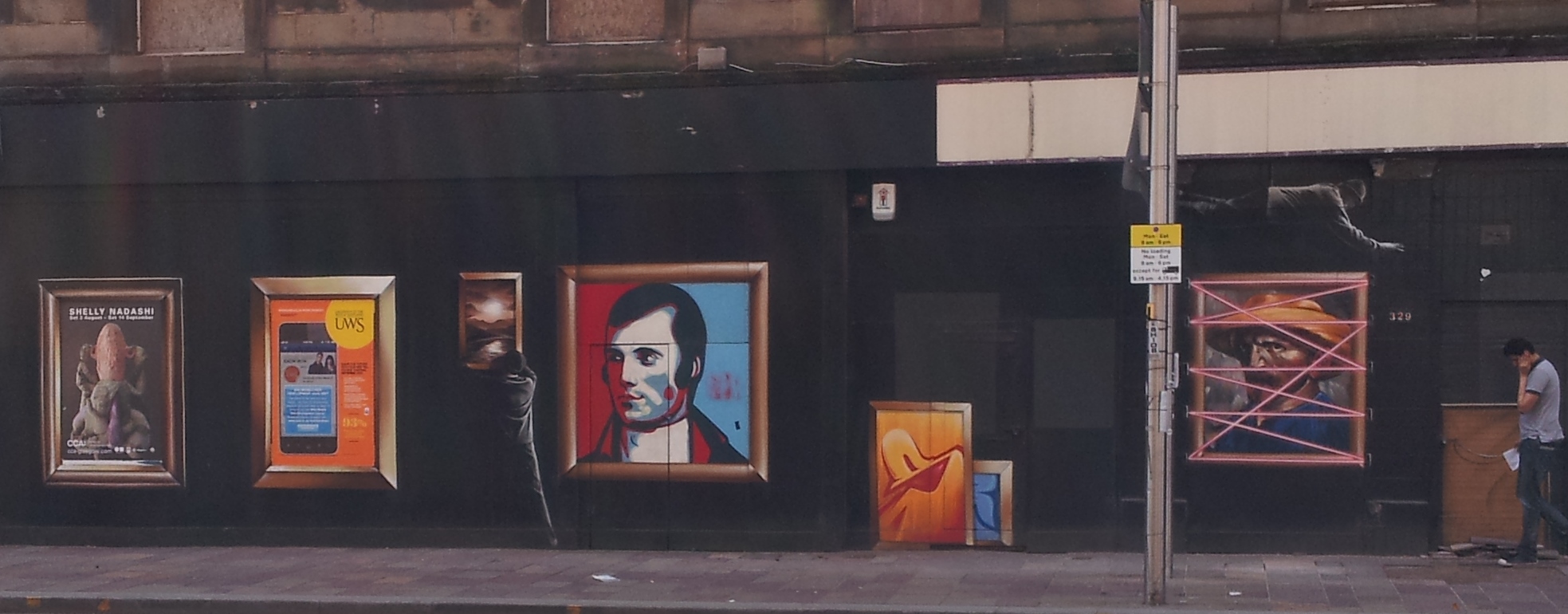
Unusually for me, a photo blog post. I’ve been meaning for a while to upload photos of the amazing graffiti art on the corner of Argyle Street and York Street in Glasgow city centre. There are billboards advertising shows, but they are surrounded by painted frames as if they are in an art gallery, and they share the walls with clever rip-offs of famous works of art. Below you can see The Great Wave off Kanagawa with an octopus escaping from it, along with The Scream and a Dali clock.Image

If you look carefully at the scene below you can see a thief trying to steal one of the paintings. If you look even more closely, you can see another one

.Image

Round the corner, on York Street, a passer-by is startled by a girl climbing out of Van Gogh’s Starry Night, while the Mona Lisa of Glasgow gazes out complacently.

Image

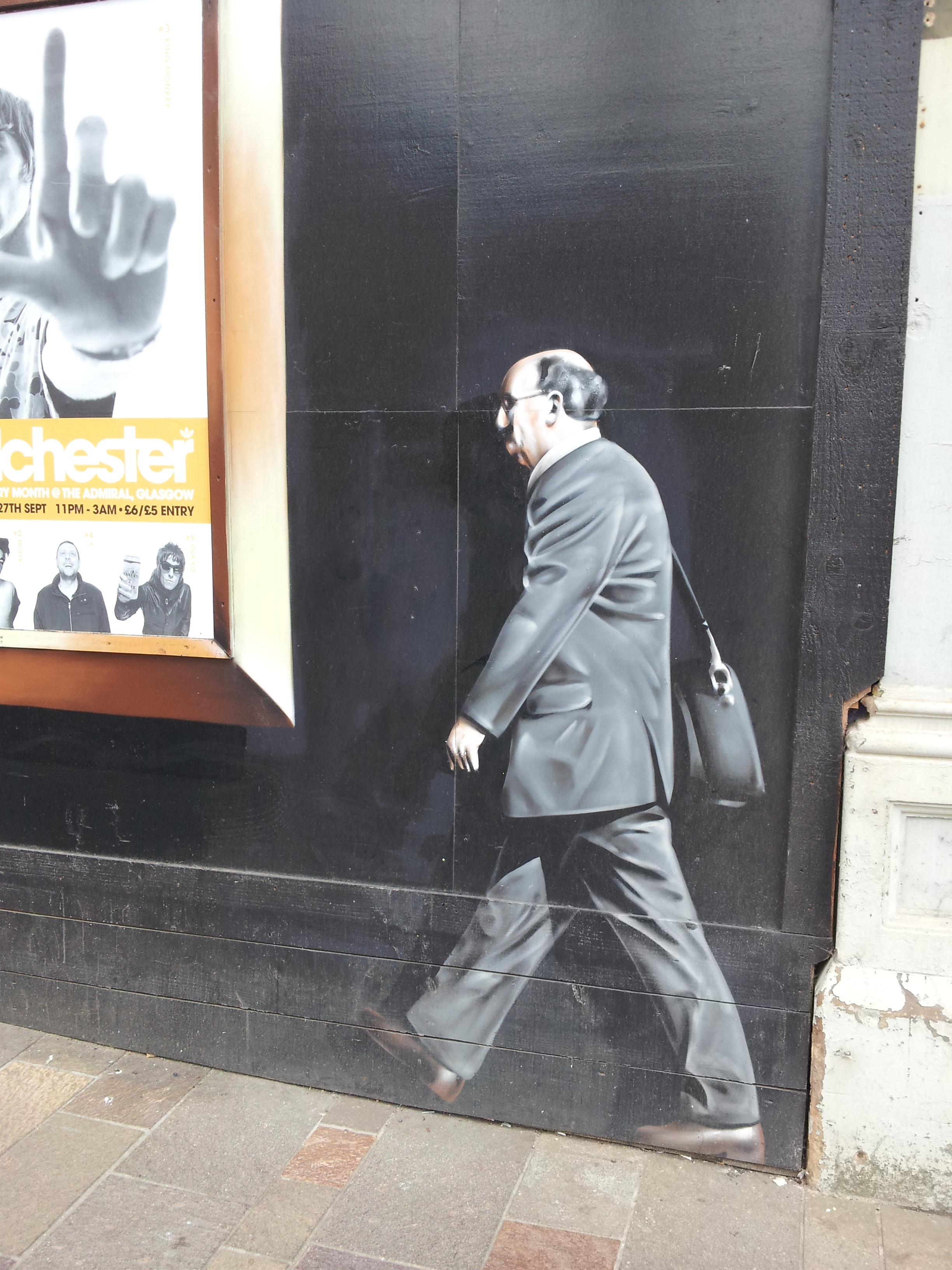
Meanwhile, a tired businessman makes his way to work, ignoring all the mural goings on.

Image

If you liked that, there’s more of this kind of thing in a public Flickr gallery by someone called D7606. (I’m assuming that’s a sort of numerical username. It would be very hard on the person if it was a real name. You’d feel like you were in Les Miserables the whole time.)

Time-Money Exchange Rates

18 Jul

I should be working just now. I should be writing an essay that will take me about three days, for which I will receive about as much money as my husband can make in one day. (He’s a stonemason and builder, in case you were wondering. He’s very good, and he has his own website here: Tony Murdarasi, Builder.)

The thing is, though, when I say “about three days”, I mean three days in which I find the time to write this blog, do the housework, get out in the sunshine for a while, and maybe (if the work goes well) get to the cinema and / or finish a short story I’m working on. We’re not talking 18-hour days. This, and the fact that the work is interesting, make the job worth taking on, even though three solid days at a minimum wage job would actually earn me more.

The reason I’ve been thinking about the value of time is that I’ve spent quite a lot of it lately doing unpleasant things, and some of it doing pleasant things, and it has made me realise that if time is money, there must be a variety of exchange rates. Let me illustrate.

Image

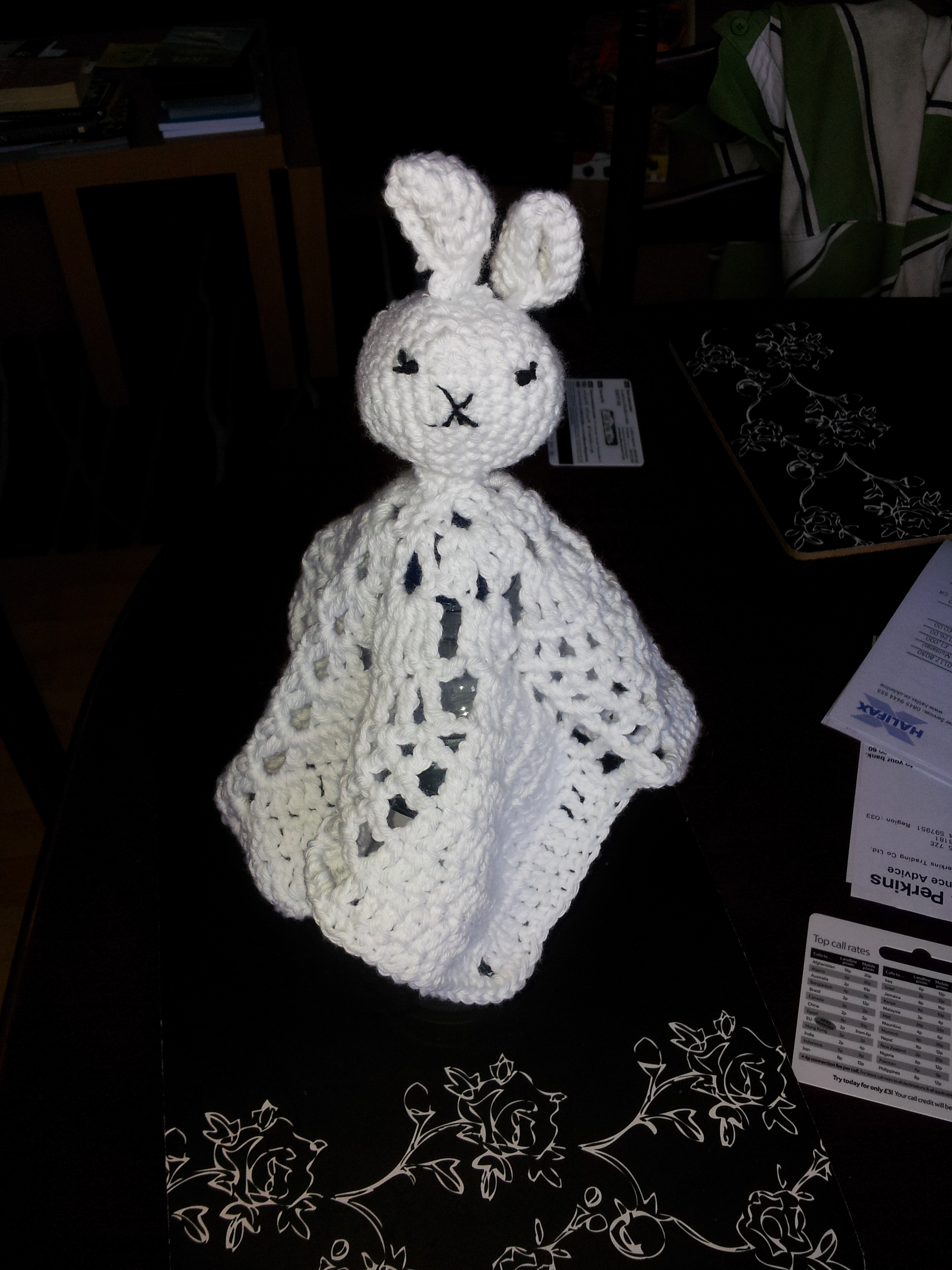
This is a wee blanket toy that I made for a friend’s baby. I estimate it took about five hours altogether, although it didn’t feel like a terribly long time because for some of it I was chatting with friends and for other bits I was sitting on the grass getting a tan. (What an amazing summer, by the way!) Items like this sell for between £10 and £25, so let’s say it’s worth £20, to keep the arithmetic simple. That would mean I “earned” about £4 per hour. Not much. But on the other hand, I enjoy crochet, I get a sense of satisfaction from creating something beautiful, and I know that my present is unique.

Now take car insurance. My husband has a van for his business, so he needs insurance, but things are complicated by the fact that for many years he had a non-EU licence, and most insurers won’t take those years into account. I spent a good hour and a half finding him insurance the night after he bought it, only to find when the documents came through that it wasn’t valid (a problem with the website wording), so I had to spend another hour and a half finding more insurance. That’s three hours, and by spending that time I managed to save at least £1,000 on what we would have spent if I hadn’t shopped around. That makes an hourly rate of £333, much better than the crochet, but far, far less satisfying. I know which hours I’d like to get back.

Inbetween the two, there was a cleaning shift I did, to fill a gap in a rota. Eight hours of sweaty slog, up and down stairs, and pulling hair out of plugholes (eugh!) at minimum wage, making a few dozen quid. (You can work out exactly how much if you have a calculator, information on the current minimum wage and tax levels, and too much time on your hands.) To be honest, that one shift was fine, but I’ve done that job before on a more regular basis, and when you come in again, and do exactly the same things again, and go home with sore legs again, the value of your time seems to increase in your mind, compared with what you’re getting paid for it. It’s disheartening to earn less in a day than a lawyer can make (or rather, charge, which is actually a different thing) in fifteen or twenty minutes.

So what is an hour worth? How much have I therefore squandered in writing this short blog post? I don’t think there’s a straightforward answer. It depends on how much you’re enjoying, or suffering through, the activity. It depends on the individual, and how important liberty is to you, compared to financial stability. It depends on your state of mind, which can make hours stretch or fly, and can make an amount of money seem either tempting or insulting. Whatever my time is worth, though, there is only a limited amount of it between now and my deadline, so I will leave you to ponder the question, and I’ll get back to work.

Cloudy, Chance of Rage

29 Jun

sivvus_weather_symbols_6
Without wanting to give away too much about my age, I remember computers before Windows. If you don’t remember that, it’s hard to even imagine it. I know that there are all sorts of interfaces now, and many people are critical of Windows as an inferior system, but whenever people complain about I wish I could sit them down in front of a black screen with a green flashing > and say to them, “Go on, make it work. Oh, you don’t know the commands? TOUGH!”

Now, I’m not in the pay of Microsoft, and I don’t know a huge amount about computers. I just “mmm” vaguely when people talk about the superiority of Linux, because I really wouldn’t know (although I’m very much not a fan of Apple, albeit for reasons that generally don’t have much to do with their software). The point I’m trying to make, though, is how amazing the modern interface is. You click on the wordprocessing icon with your mouse, the word processor opens on your screen, you click somewhere in the text and start typing. Let’s break that down a little:

You use your mouse to move an arrow that isn’t really there (it’s just different pixels on the screen changing colour giving the impression of movement). You use it to click on an icon that is also just some differently coloured pixels on a screen. From this your computer is able to tell which program you are trying to open, even if you moved that icon halfway across the screen only seconds before. When you open the menu (which conveniently has little words like “open” instead of requiring you to input the computing commands you don’t know) and request a file it will trawl its digital depths to retrieve reams of data which it then presents on-screen in the form of a typed document. But it’s not a typed document, it’s lots of incomprehensible binary data just pretending to be a sheet of paper and some ink. Then, when you move your non-existent cursor over the imaginary document it is able to tell where amongst the words that are not really there you have selected, and when you type it updates its confusing string of data in such a way that more pictures of typed letters appear on the screen exactly where you want them. 

I do it every day – I’m doing it now – but when I stop to think about it, it’s still amazing.

However, all this not-really-there-ness has a downside. You can lose a paper document, of course. You can rip it, spill coffee on it, accidentally set fire to it. The ink may even fade over time until it’s impossible to read. But it won’t disappear in a puff of smoke. That’s exactly what can happen to digital files, though, and it happened to me today.

Now before anyone starts to wag a finger at me and talk about backing things up, I did, and that was what caused the problem. I backed up the completed manuscript of my children’s biography of St Augustine in a cloud-based storage facility. That takes not-really-there-ness to a whole new level. I can open files on my computer now, that not only aren’t really words on paper, but aren’t even complicated data on my computer pretending to be words, because they’re not on my computer at all, they’re only hovering there in an insubstantial, wraith-like way, while the actual data is on a server far, far away. Too far away to kick when it manages to eat the last hour of work you’ve produced.

All was not lost, however, as I eventually managed to restore a “conflicted” file that turned out to be the proper file, but there was much ranting and raging up to that point. It makes you feel so helpless. I searched for different versions of the file, I searched for words that I knew were only in the completed version, but the computer kept telling me it did not exist. It also makes you question your sanity. “But I saw it!” I kept saying to the computer. “It was there! I typed it! I did!” If it hadn’t been for the presence of a friend who saw the finished version, I might have started to doubt it myself. After all, there’s no evidence, no inky marks on your thumb, no impression of the words on a writing surface or another piece of paper. There’s just the computer telling you that the collection of data you spent hours tapping away at does not exist. And if it says so, it’s right, because these things only exist by the grace of the computer. I may have made this point before, but digital documents are not real. It takes you right back to that feeling of helplessness facing the flashing green > without the proper commands.

At some point in the next six months, that errant electronic manuscript will become a real, paper-and-ink book, and then it will be a lot harder to make it vanish. Until then, perhaps I should just try the form of paper-based storage known as printing.

A Walk on the Child Side

8 Jun
Getting out in the sunshine - just one of the advantages of kids.

Getting out in the sunshine – just one of the advantages of kids.

For the last year and a half I have been looking after my wee niece, since giving up the office job at the start of 2012. Now my sister is on maternity leave again and my services are temporarily not required. It seems like a good time to review this period of my life. It has certainly been challenging, financially, emotionally and at times physically, but I want to focus on the positive aspects, since they far outweigh the negative ones. Looking after my niece has been for all intents and purposes like being a parent, albeit part-time. So here are the best things, in my opinion, about having small children.

1) Getting outdoors. One of the worst things about a nine-to-five, Monday to Friday job is that you have to languish in poorly air-conditioned rooms on the best days of the year, and by the time the weekend comes the hot spell has almost always broken. Not so when you are looking after kids. You can kick a ball in the garden, go for ice cream, or play in the park. They do not get bored with playing in the park even when it is the fourth day in a row. Toddlers are good that way.

I’ve got far more fresh air and exercise these last few months than in the years before. Of course, I’ve also been rained on a lot because I can’t hold an umbrella and push a pram, but I think hours spent pushing a swing in the sunshine make up for that.

2) Kids are extremely portable. So are babies. This means that I don’t have to wait until the evening to go the supermarket, or the weekend to go to town. That’s not to say I made my poor niece tail around after me the whole time – mostly it was the other way round – but if I needed to go somewhere or buy something, or I just wanted to meet a friend, my niece could be popped in the buggy, or later just clasped by the hand, and taken with me.

3) Toddlers are easily amused. You’ve heard the one about how the wee kid always prefers the box to the present that came in it. That’s not necessarily true, but it is true that things like boxes, pieces of paper, handbag straps and train tickets can distract them for minutes at a time – which is good, considering their attention spans.

When my niece was a baby I didn’t need to take any toys with me when we went out because she would happily play with the clip and zip on my handbag for the whole train journey. Even now she’s happy to be read the same slim book again and again. Even housework is fun! If I sweep the floor, she wants to join in. I can kill quite a lot of time by getting her to help me hang up or take down the washing – and she loves it!

4) Kids learn so much! I am constantly amazed at the way my niece picks things up – and not just her, but all kids her age (although I reserve the right to think that my young relatives are particularly advanced). At first, of course, it’s just stuff like moving their hands in the direction they want them to go, then rolling, sitting up, crawling and so on. That’s interesting enough, if a little predictable.

Soon, though, they’re learning amazing stuff. When they learn to talk they pick up words all the time (so be careful what you say in front of them). It’s so exciting to hear my niece put together her own sentences from her own thoughts, insights into what’s going on in that freshly minted mind. I’ve written before about how she copies me putting on make-up and so on, but she also learns much more useful stuff.

From her Ballet4Babies class she had learned to plie and curtsey (sort of) and from me and her parents she has learnt her way round a kitchen. At two years and two months she can (with a bit of assistance) make coffee, tea, toast and scrambled eggs (!) and does a pretty good job of cutting out and decorating gingerbread men. If it wasn’t for the fact that she’s not allowed to touch the “burny” oven or pour hot water, she could set up in business as a caterer.

5) Kids love you. This is the best thing of all. When I arrive at the station to pick her up, cold, wet and scowling, my mood is immediately brightened by my niece’s smile of welcome. She’s genuinely pleased to see me, even though she only saw me the day before. She doesn’t care if I put her in the naughty place earlier for some misdeed, or that I’ve run out of yoghurt – well, actually she does care quite a lot about yoghurt, but she loves me anyway.

And now she has reached the point where she can tell people that she loves them, and can give kisses and hugs. It would melt the hardest heart. And the other day, my sister tells me, just before bed, she sleepily told her one-week old baby sister that she loved her. Adorable!

See? Wee kids are great.

A Plague of Dogs

21 May

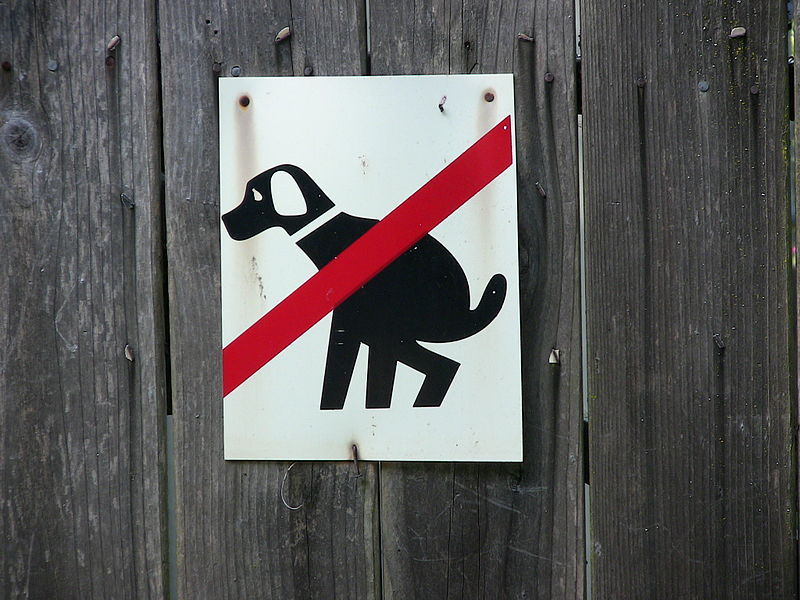
no dogsWhen I rule the world, private dog ownership will be banned. This is not some kind of communist measure applying to all private property, it’s just dogs. (And cars, but that’s a different story.) Obviously, exceptions will be made for guide dogs, dogs for the deaf etc. People on farms can have dogs to do useful things. Keeping dogs as pets, however, will be right out.

In case I ever do rule the world, and bring in this regulation, let me explain the reasoning behind this prohibition.

1) Dogs defecate. All over the pavement in fact. This is something that is brought to my attention when I walk the obstacle course of dog dirt that is the route from Shawlands to Pollokshields, in Glasgow. The sheer quantity makes the mind boggle and the shoe sole quail. I once counted it. (Yes I know, that’s weird, but I was thinking that if I’m going to rant about it on the internet I should have some semi-statistical evidence.) I passed twenty-seven separate ‘incidences’ of dog poo.

It’s not just the disgusting smell (cleaning dog dirt off my shoes makes me heave because of the smell), it’s also the danger. Some dogs carry toxocara which, when it infects humans, can leave them partially blind. Lovely. Dozens of people, mainly children, come down with toxocariasis each year, because dogs have uncivilised toilet habits, and their owners have an antisocial attitude to clearing up after the dog.

And don’t get me started on people who think that if their dog defecates on grass the poo will magically disappear so they don’t have to deal with it. I don’t have a garden. We have communal “gardens” (read: car park) with a little strip of grass around the edge. In sunny weather I would like to succumb to the almost overwhelming Scottish impulse to throw myself down on the nearest piece of grass, but sadly it would mean settling myself upon a bed of dried dog-doo.

2) Dogs smell. Especially when wet, but even when they’re not. Houses that have dogs in them smell of dog. Cars that have dogs in them smell of dog. Buses with dogs on them… well, you get the idea. Perhaps there are people who relish the smell of dog. I am not one of them.

3) Dogs bite. Yes, they do. Not all of them, not even most of them, but plenty. There were six and a half thousand hospital admissions between April 2011 and 2012 caused by dog bites or other forms of attack. Attacks are also becoming more common. The RSPCA recommends that:

Children should not be left alone with dogs and warned not to approach them when the dog was eating, had a toy or possession, was sleeping, sick, injured, in pain, tired or had hearing or vision impairment. (RSPCA guidelines)

My solution is much simpler – no dogs.

4) I am scared of dogs. Related to 3, naturally. Some people call this a phobia, but I don’t think a fear of an animal that may maul you is irrational. My tiny niece has no fear of dogs, and I don’t want to instill one in her unless its necessary, but it does mean that every time we see a lovely wee doggy that she wants to stroke, my brain is whirring with thoughts like “Is this one a face biter?”, “Could I protect her from both of them at once?” and “Where is the nearest hospital?”

5) Dogs are an insult to wolves. I’m actually quite fond of wolves. (I probably wouldn’t be if people kept them in their tiny flats, let them poo all over the outdoor space, and left them free to attack people, but fortunately they don’t.) Some dogs show their relationship to wolves, and you can sort of see the point of them. Alsatians, Border Collies and other working dogs at least bear a passing resemblance. Chihuahuas don’t, and neither do Pugs or Shih Tzus or any other form of snub-nosed, silly-haired, shrunken bodied curs. I can only assume that when wolves see the ridiculous specimens their descendents have become, they turn bright red under their fur. Or try to eat them.

I appreciate that many people are fond of dogs, and will not share my views on keeping dogs as pets. Don’t worry, when in power I will be a magnanimous and reasonable leader, and I am in favour of the free movement of persons. When I rule the world, you will be allowed to emigrate to whatever planet you wish, and take your dogs with you.

Reading Corrupts, Watching TV Corrupts Absolutely

21 Apr

image

In November 1960 Penguin were found not guilty under the Obscene Publications Act over the publication of Lady Chatterley’s Lover. The book was judged to have sufficient literary merit to make up for the sex scenes and swear words. One of the questions famously asked by the prosecution was whether the jurors would want their wives or servants to read the book. As well as being rather patronising (some of the people on the jury were actually women), the question seemed to assume that only the weaker sex and the weaker-minded lower classes could possibly be corrupted by the book. Normal, middle class men were immune.

That was a long time ago and seems rather quaint (especially the bit about having servants). Now we have Fifty Shades of Grey which, they say, has no literary merit whatsoever, and certainly has a lot more sex. Despite their differences, though, the publication of 50 Shades would not have been possible without the acceptance of D H Lawrence’s book decades earlier. That’s probably not the kind of legacy the jurors thought they were leaving. In the fifty years or so since that trial we have gone from a time when a book could be banned for having sex in it to one where all TVs have several porn channels on them unless you choose to remove them.

It’s not a straight line from D H Lawrence to E L James, and I’m certainly not claiming that Lady Chatterley’s Lover is responsible for the downfall of western civilisation (although personally I don’t like Lawrence’s writing, and I think he had a very dodgy view of sexual relationships in general). If you want to trace the changes in western culture over the late century or so and you’re up for a bit of philosophy you should instead read Escape from Reason by Francis Schaeffer by Francis Schaeffer. That’s not what this post is about. It is about personal corruption.

This is something that has been on my mind since I went to a Royal Foundlings gig last month. Not that they are a corrupting influence – quite the opposite – but the lead singer said something about being careful what you put into your mind, and it got me thinking about some of the things I do consume, mentally, and the effect they have on me.

I’m not just talking about really horrible stuff that, once seen (or read) you wish you could un-see. (The book of American Psycho would fall into that category, as would the film The Change Up. I stopped both of them partway through, but too late to remove horrible images from my mind.) I’m talking about the more harmless-seeming but possibly more insidious stuff that subtly alters the boundaries of what you find acceptable.

I used to watch How I Met Your Mother, a light sitcom about a group of twenty-something friends, their struggles and relationships. The content is fairly tame, very pre-watershed, but the attitudes it espouses are more of a problem. I finally realised what it was that bothered me when I saw the blurb for a particular episode on the TV guide. It said that the main character, Ted, is really excited about his new girlfriends, until his friends point out that he hasn’t even slept with her yet. It wasn’t so much the premarital sex – a phenomenon hard to avoid in fiction or reality – it was the casual assumption that a romantic relationship is not valid until it’s sexual, and that anyone who would wait for marriage must be completely insane. It’s hard enough to live up to Christian sexual ethics at the best of times, but you just make it harder for yourself if you’re feeding yourself messages like these on a daily basis.

Then there are programmes that don’t actually espouse dodgy values, but just colour the way you interpret the world. I have a friend who is a lovely person, but has a rather negative, cynical attitude to – well, just about everything, and certainly all institutions or sources of authority. When I see the kind of things she watches on TV, her attitude become less surprising: it’s all documentaries about paedophile priests, child neglect and other types of crime and vice. These things go on, of course, but they are not the norm. Focusing on the negative makes you see things more negatively. To a large extent, you see what you expect to see – and the material you read and watch trains your mind in what it expects to see. (In fact there’s a wee Bible verse about that, if you’re interested.)

I’m not trying to pick specifically on How I Met Your Mother or depressing documentaries and label them as the source of all televisual evil; I’m just making the point that it’s good to be aware of the messages you are receiving from the material you read, and particularly watch (since it’s a more passive activity). Are there things you used to find shocking that no longer shock you? Are there attitudes that used to make you uncomfortable that no longer do? It’s all very well to say you’re becoming less narrow-minded, or prudish, or bigoted, or whatever other disparaging word you find most comforting, but the reality could be more disturbing. Your ‘harmless’ pleasures could be corrupting your morals and corroding your soul. We are more corruptible than we like to admit. An open mind is a valuable thing – but so is a vigilant one.

Singer Song of a Fiver

22 Mar

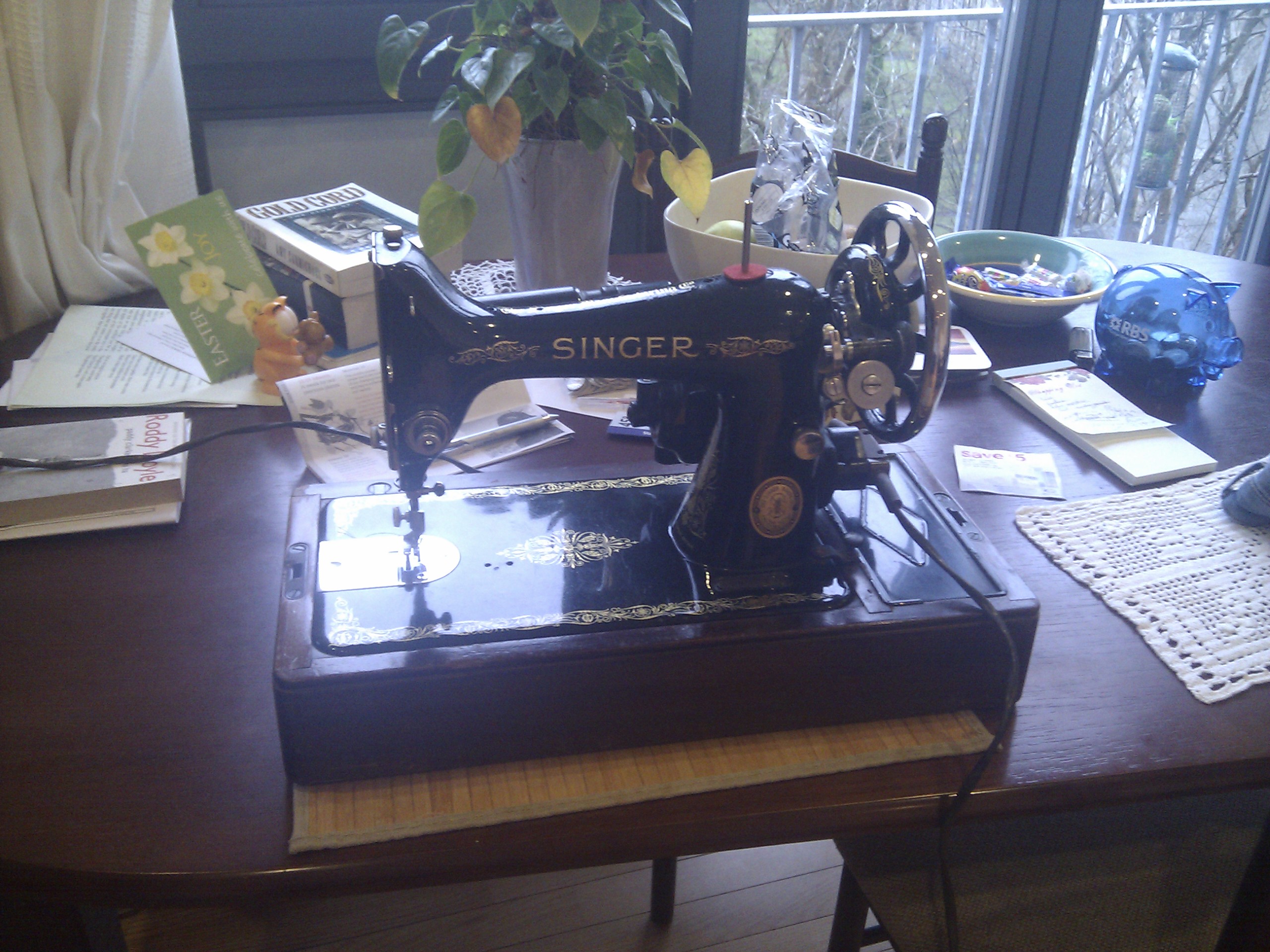
I feel another rant coming on soon (dogs, in case you’re wondering), so to avoid having two rants in a row and making you think I’m some sort of Mrs Angry, I’d like to stick in a wee paean of praise to my Singer sewing machine. I bought this little beauty for £5 at a jumble sale, hence the post’s title. I got it for a fiver because when the bloke selling it told me the price, which was £10, I replied,”Ten pounds?” incredulously, thinking “That’s so cheap!” He mistook my incredulity and said, “Ok, five pounds then.” I didn’t argue – I just called my husband to carry it home for me. (That’s what they’re for. That and killing spiders.)

The model I have dates from about the 1950s and is one of the earliest electric kinds, which is handy because I have never got the hang of a mechanical foot pedal. It is probably made of cast iron (although it feels like it’s made of lead), requires regular oiling,IMG_20130316_162536 and is painted pretty colours in that old Singer way. It came with an integral compartment full of useful bits and bobs, including an instruction booklet that smells very old. (I love the smell of old books. Especially 1960s paperbacks for some reason.)

The Singer earned back its £5 layout the first time I shortened a pair of jeans. Since then, it’s been in profit. It’s also become more ambitious, moving on from just shortening legs to taking in waists, converting jeans to a skirt, and even producing an authentic(ish) Regency Period dress for a Jane Austen ball out of some sheets and pillowcases.

I’m not actually much of a sewer (no, really – crochet is my bag), certainly not a dressmaker, but despite that I have had reason to be glad of my purchase many times. And its sturdy carrying case even makes a handy additional coffee table. Probably the best five pounds I’ve ever spent.

Toilets I Have Known (on a scale of one to ten)

9 Mar
The Trainspotting Toilet - about a three.

The Trainspotting toilet – about a three.

I have a rather idiosyncratic approach to toilets – so much so that a friend suggested I share it on my blog. I’m not referring to the way I use toilets, which is entirely normal. (Athough really, in the privacy of the cubicle, who knows what is normal?) No, I’m referring to the fact that I award them a score on a ten point scale.

This is just public toilets, I should probably say. I’m not going into people’s houses, wrinkling my nose and saying, “No better than a six,” like some contestant on a lavatorial version of Come Dine with Me. However, when using a toilet in a public place for the first time you might well find me doing that.

This started as a coping mechanism in Albania. In the less developed parts of the world you are far more likely to find toilets that I would consider to be on the lower end of the scale, and using them can be quite a trying experience. To help, I would assign them scores, which is not only a distraction in itself, but also reminds you that it could be worse.

So what are the criteria for scoring well on the WC scale? It’s partly subjective, but here are some of the basic elements that score a toilet points: a door that shuts; a lock on the door; a light source; the ability to flush; toilet paper, and somewhere to dispose of it; water to wash your hands, preferably running; soap; a method of drying your hands; a hook (see my post on disabled toilets); a mirror; an inoffensive smell. Extra marks can be gained for having such luxuries as hand cream, aesthetically pleasing decor and floor-to-ceiling cubicle doors.

Some of these seem pretty essential, do I hear you say? You’d never find a toilet without them? Oh yes you would, and I have seen facilities missing all of these things, though usually not all in the same toilet.

So let’s examine both ends of the scale. Although in Britain you wouldn’t expect to find less than a 6 at worst, it takes something special to reach the perfect 10. Toilets in art galleries and beauty salons often score 9s or 10s, as do posh restaurants and hotels, but possibly the nicest I have ever seen is in The Blythswood Hotel in Glasgow. I may not like their attitude to ordinary working folk, but I can’t fault their toilets: a haven of peaceful salubriousness, with restful lighting, lovely fittings, and tiny single use hand towels that you throw in a basket afterwards. Bliss – definitely a ten.

What about the other end of the scale? What kind of a toilet scores just one? Are you thinking of the filthy loo in Trainspotting? No, that’s about a 3. Disgusting as it was, it had a door (that locked, I think) and sinks to wash your hands. The toilet in Slumdog Millionaire, then? Again, no. It had a door and someone to guard it. I think there may even have been paper. It would score at least 2. So is it possible to score only 1? Yes. I have seen the worst toilet in the world (I believe). It was in Albania, I think in Erseke though it may have been Leskovik. It was a hole in a concrete floor above a river. The room had three concrete walls; the fourth side was entirely open to the road, from where I observed it. I did not use it. That’s how you get a 1. So the next time the loo roll has run out or the hook is broken, think of Erseke, and be grateful.

Letter to Policy Exchange

18 Feb

The Policy Exchange, a think tank looking at the Government’s unpaid labour programme, has called for evidence about the current system of getting people into work. My friend Kerry decided to take them (semi-) seriously, and has written a very entertaining letter “sticking it to the man”. Enjoy!

My Letter to Policy Exchange.

Counting My Blessings

14 Feb
Christian Aid's "Count Your Blessings" programme

Christian Aid’s “Count Your Blessings” programme

I don’t remember Lent ever starting before Valentine’s Day before, although I suppose it must have happened. It’s not a very good arrangement, since I have lots of lovely choccies and a nagging feeling that I’m not supposed to eat them. I will quash that feeling, however, since I haven’t given up chocolate for Lent and a woman whose husband books a boys’ holiday over Valentine’s Day deserves all the chocolates she can get!

This Lent I will neither be giving up something  nor taking up something. Instead, I’m going to follow the Christian Aid “Count Your Blessings” programme. At least, I am when I get the leaflet back. I blithely left it at work for other people to see, since Christian Aid’s website assured me that an app was available. It is, but it won’t download onto my phone so it’s back to the paper version.

“Count Your Blessings” give you little daily facts about the developing world or conflicts and asks for tiny pledges of money every day or two. For example: “At the end of 2011, an estimated 42.5 million people were living in a place to which they had been forcibly displaced due to conflict or persecution. Give 10p for every year you have lived in your current home.” While we’re struggling with a horrible recession it’s easy to forget just how much worse off so many people in the world are. Although I said I’m not giving anything up, I am saying “no” to the occasional treat to balance out the pledges from “Count Your Blessings”, which again makes me aware of just how good life is for me.

Back to Valentine’s Day, and the e-book of Foreign Encounters from Writers Abroad is now available. This is a collection of stories about relationships, written by ex-pats or ex-ex-pats (like me), and profits go to a charity that provides books to schools in the developing world. This also requires a tiny pledge of money: £1.90 on Amazon, or $2.99 on Smashwords. Look out for my atmospheric little piece, “Sounion”.