Archive | Christian musings RSS feed for this section

The time of your life?

18 Nov

Even as I sit down to right this post, I am thinking Do I actually have time to do this? I have to remind myself forcefully that the answer is yes, yes I do. I don’t have to check my emails again – they do not evaporate if I don’t look at them within twenty minutes; I don’t have to clean the mirrors (well actually I do, but not right now); and I absolutely do not have to check if I have any new activity on Facebook or Twitter. Those are both vaguely work-related, by the way (most things are if you’re an author), but not urgent or even essential.
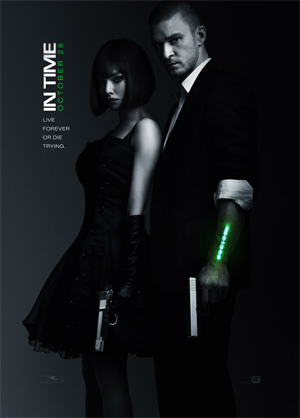
In Time - an interesting take on extreme time pressure.

In Time – an interesting take on extreme time pressure.

The thing is, I feel like I don’t have enough time in the day, as I’m sure most people do, but I’m not convinced that I actually spend my time very wisely, or that I assess how I have used it very accurately. I got to thinking about it today because of a BBC article about the new meal-replacement drink Soylent, which can save time cooking and eating. (There’s a case in point – clicking through to online articles from social media can be an interesting, but rarely productive, use of time.) It said that if it was all about saving time, then people would certainly replace meals with a dodgily-named drink (look up Soylent Green if you don’t know what I’m talking about), but it’s not. The writer of the article thinks it’s about excessive busyness distracting us from the human condition. I’m not about to get that deep and philosophical here (although I think it’s an interesting point). I just want to think a little bit about good, bad and better ways to spend time.

As a freelance writer, domestic skivvy (sorry, wife) and occasional jack-of-all-trades, I feel particularly pressed for time because I have so many competing priorities. If I’m food shopping I feel that I’ve got to hurry up because I should be writing. If I’m writing I feel like I should be writing something else, or doing housework, or researching. You can see the problem: whatever I achieve in one category, it means I achieve less in another, so I always feel like I’m catching up. In the last few days I’ve submitted the final draft of a manuscript, finished a chapter of the biography I’m working on and handed in an assignment for a distance learning course, which should give me a glow of satisfaction, but I haven’t cleaned the mirrors (I can see them out of the corner of my eye – I’m not usually this mirror-obsessed) or baked biscuits, so I feel like I have not finished what I need to do. This isn’t a problem of time, I would suggest; it is a problem of attitude.

I think it’s possible to go to extremes in opposite directions, and either push yourself too hard to achieve all of the things you want to do before you die, because time is a finite resource for mortal human beings, or to put these things off indefinitely and get on with day-to-day living, as if achieving what you would like to achieve, or even attempting it, is a foolish dream. It’s not a myth, by the way, that there are loads of people who would love to write a book but have never got round to it; I’ve met enough of them to believe it. The old “what would you like to read in your obituary” technique can be pretty useful if you tend to just drift. But at the same time there’s no point in pushing yourself to extremes, because part of the point of life is to just live – otherwise they might be writing your obituary too soon.

There’s a guy called Ramit Sethi who runs various online courses designed to improve your life and particularly your finances. He actually distributed a video on saving time, which was very useful, and which I will watch again if I get the time 😉 (Seriously, it’s worth a watch. Key insights for me were not to fight against my natural rhythms  – I’m rubbish at mornings – and to work in places, like coffee shops, that increase my productivity.) But what I think is particularly interesting is what he says about saving money, which also applies to saving time. He says there’s no point in cutting out that latte every day, or whatever it is, as most money saving advice says you should. It won’t make that much difference, and you’ll be giving up something you really enjoy for not much reward.

With regard to money, the answer, according to Ramit, is to make more rather than spend less. That doesn’t really work with time (although you can become more productive), but I think his less dogmatic, more relaxed attitude to little pleasures can be applied to the use of time, too. I shouldn’t necessarily cut out all uses of my time that aren’t productive or laudable, because while I might fit a few more ‘worthwhile’ things into my life, it would be less of a life and more of a chore. One of the things I particularly struggle with, from a Christian point of view, is feeling that I’ve got to justify my very existence by working hard. This is not what the Christian life is about, and that’s something I have to constantly remind myself of: I don’t need to do anything to justify my existence, I’m already justified. I think Ramit’s “don’t give up the latte” advice is a useful corrective to this extremism, too.

I’ll leave you with a line I love from the Mumford and Sons song Awake My Soul: “where you invest your love, you invest your life”. That doesn’t sound like a bad way to organise your time. A little of what you fancy does you good, and a little of what you love, or like, turns an existence into a life. After all, wasting time may not always be a waste of time.


Why Morgan Freeman is Not God

7 Sep

Last week at church I learned that Morgan Freeman is not God. This probably doesn’t come as a great surprise unless you have genuine problems distinguishing between films and real life, or you subscribe to the conspiracy theory that Morgan Freeman playing God in the Almighty films is actually a clever double bluff.

The point the preacher was making, in fact, wasn’t so much that Morgan Freeman isn’t God as that God isn’t Morgan Freeman. By that I mean that God isn’t some wise, kind twinkly-eyed man who keeps a fatherly eye on us and gets in touch from time to time to give some sage advice and gentle encouragement. And that might come as a surprise. That’s not to say that God isn’t wise, or kind, or interested in our lives. The problem with the Morgan Freeman view of God isn’t that it’s inaccurate in details; it’s that it suffers from a staggering lack of scale.

It’s this same problem with scale that’s at the heart of people finding the idea of God creating the world laughable. There seems to be this idea that the universe is the ultimate reality, brought into existence (probably) by the Big Bang, and within it there are a group of credulous people who believe that their particular planet, or solar system or galaxy, were made by a divine being that internet atheists so charmingly call the Sky Fairy. That does sound silly, but that’s not what anyone’s seriously proposing.

Instead, try to get your head around a being who created not a planet or a solar system, but time, space, energy, matter, the lot. The one who brought into being all the laws of physics that supposedly make his existence redundant as an explanation of how we got here. The true ultimate reality who not only created everything the exists, but who is the source of all existence, upholds and maintains everything we know (and plenty we don’t) by pure will, and could wink it all out of existence on a moment if he so chose. You probably can’t get your head around that fully. People spend lifetimes pondering the implications of it. But the mere attempt gives you a fair inkling of what the preacher meant by “God is not Morgan Freeman”.

I’m always baffled by people (and I’ve met a lot of them) who believe there is “a god” but don’t feel the need to look into it any further, as if the existence of a creator to whom they may one day have to answer isn’t relevant to them. I’m not one for climbing mountains just because they’re there (not ones that require oxygen or special equipment anyway) but if you really believed there was an all-powerful being with the answers to life and who, rumour has it, is so interested in our lives that he came to live with us and die for us, how, how could you just leave it as merely an interesting fact, like the capital of Peru or the etymology of “treacle” (which is fascinating, by the way)?

In a rather nice bit of dovetailing, this week’s sermon was on how God should be at the centre of every part of our lives, not just a special religious section. It was based on a part of the Bible sometimes known the Shema:

“Hear oh Israel, the Lord our God, the Lord is one.” The passage continues: “Love the Lord your God with all your heart and with all your soul and with all your strength.” The preacher last week also quoted the Shema but, rather impressively, he was able to recite it in Hebrew. Jesus quoted this verse, along with another, “Love your neighbour as yourself”, when he was asked which commandment was the most important. His response was that all the commandments in the Bible follow from these two. Again, you could spend a lifetime of theological study working through the implications of that, but for today, let’s just take it as read.

The point the minister was making today was that Christianity is not just about a fuzzy feeling of “Jesus in my heart”, and nor is it a thing you do on Sunday if you have nothing better to do. Instead, loving God and loving other people should be at the heart of everything we do, say, think and are. As the song says, “that’s how deep it goes, if it’s real“.

I was once in a church service where there was an incidence of heckling. This is rare in church, so it sticks in my mind. A lady stood up and said, quite sincerely, that she believed that God just wants us to be happy. I remember thinking, “No, he doesn’t just want us to be happy. He wants so much more than that for us.” Holiness, for example. Salvation. To be fully known. Love. Joy. Peace. The whole shebang. Once again, it’s not an error in detail, it’s a failure of scale.

It’s sometimes tempting to make up the attributes of God we would like, as if he were a fictional character (played by Morgan Freeman, say). You know the kind of thing: “I can’t believe in a god who would X”; “My god would never Y”; or “God just wants us to be happy (regardless of what questionable things we may wish to do in the pursuit of happiness)”. Fine if you’re making up a character for a film, not so fine if you’re talking about the one and only pre-eminent being who can neither be deleted nor altered to fit in with someone’s dearly-held mental picture. You can get to know what God is like. You can accept what you find, or wrestle with it, or refuse to believe altogether, but you can’t seriously expect reality itself to conform to how you would prefer it to be.

The minister today asked, if you’re keeping God at arm’s length, what kind of god is it you’re keeping at arm’s length? Because the God on whom your every breath depends can’t be kept in his place or just brought in in scenes 6 and 31 for dramatic effect. His place is absolute sovereignty. He is in every scene. He wrote the film. So if the God you believe in can be portrayed even remotely accurately by a twinkly-eyed actor with a gravelly voice, you might want to take a few steps back, and get a better sense of scale.

Note 1: My church puts sermons online, so if you would like to listen to the originals, rather than just reading my musings on them, you can find them here. (31st August and 7th September 2014)

Note 2: Will Self wrote a short story called “Scale” all about losing his sense of scale. It was my first introduction to Will Self, who is an excellent writer, but it is not in any way related to this blog post.

The Book of Hezekiah

18 Oct

I am in the process of organising a ceilidh. (23rd November at Adelaide Place Baptist Church, do come along if you’re in Glasgow.) Finding a date that worked for the venue and the band, and didn’t clash with any popular events or holidays, was a bit complicated and protracted, and no doubt there will be all sorts of headaches to come about layout, first aid provision, audio, catering and so on (in fact I’m giving myself a headache now just thinking about it). However, one thing that I didn’t have to give any serious thought to was the start time: 7.30pm, of course, as is prescribed in the Book of Hezekiah.

Hezekiah is a book of the Bible that contains all sorts of useful instructions and information about Christian living. This is where it says (in chapter 3, “Times and Seasons”) that morning church services should be held at 11 (or 10.30, at a pinch) and evening ones at 6.30, but that all other evening Christian events (or in the case of the ceilidh, events with Christian venues and / or organisers) should start at 7.30. This chapter also lays down the exact amount of time one should remain in one’s seat after the service, depending on the solemnity of the final hymn, depth of the sermon and proximity to communion (Eucharist), before one can make a foray towards the biscuits.

If you’re of a religious persuasion at all, you may be wondering where Hezekiah is in your Bible, and why you’ve never come across the 7.30pm rule written down. I mean it sounds familiar, but you can’t quite place it. Minor prophets, maybe, all those tiny books tucked away at the end of the Old Testament that you only come across accidentally when trying to find the start of Matthew at Christmas? Or, if you’ve gone so far as to check the contents page of your Bible and find it’s not there, maybe it’s in the Apocrypha, that land of exotic and forbidden scriptural delights?

No, I’m afraid the Book of Hezekiah, while very useful, doesn’t actually exist. It’s just a Christian joke, but one with a point. It’s an unwritten record of our shared assumptions and habits. Tea and coffee should be served after the service, not port and sherry. Why? Because thus is it laid out in Hezekiah 5:12. It should be served by women, of course, as is prescribed in the following verse. Women must also lead the Sunday school and clean the church, of course. The Book of Hezekiah’s not great on gender liberation. These instructions may change in the future. One of the unusual things about Hezekiah, compared to other Bible books, is how it alters its content from one generation to the next.

Then there are the moral precepts that you know are right, but that you just can’t find anywhere else in the Bible, like the prohibition of gambling or the command not to lie. Yes, the ninth commandment almost says you shouldn’t lie, but not quite, so you need the Book of Hezekiah to fill the gap. This is less of a problem for Catholics of course, who can draw on both scripture and tradition. Protestants (like me) base their beliefs, in theory, sola on scriptura, meaning that when scripture lets you down, you have to turn to Hezekiah.

Now I’m not saying that you should lie and gamble. Nor am I advocating a departure from the authority of (real) scripture, although it is worthwhile to bear in mind that while Bible+ has its dangers, the sola scriptura approach also has potential weaknesses. No, what I’m saying in a rambling sort of way is that you should question your assumptions, even if everyone else in your church holds the same assumptions. What are they based on? If you don’t know, maybe you should find out, and decide whether or not you should keep them.

“For in the critical examination of the assumptions, wisdom is found,” as it says in Hezekiah 1:6.

(But the ceilidh will still be at 7.30pm – I’ve printed the tickets.)

Reading Corrupts, Watching TV Corrupts Absolutely

21 Apr

image

In November 1960 Penguin were found not guilty under the Obscene Publications Act over the publication of Lady Chatterley’s Lover. The book was judged to have sufficient literary merit to make up for the sex scenes and swear words. One of the questions famously asked by the prosecution was whether the jurors would want their wives or servants to read the book. As well as being rather patronising (some of the people on the jury were actually women), the question seemed to assume that only the weaker sex and the weaker-minded lower classes could possibly be corrupted by the book. Normal, middle class men were immune.

That was a long time ago and seems rather quaint (especially the bit about having servants). Now we have Fifty Shades of Grey which, they say, has no literary merit whatsoever, and certainly has a lot more sex. Despite their differences, though, the publication of 50 Shades would not have been possible without the acceptance of D H Lawrence’s book decades earlier. That’s probably not the kind of legacy the jurors thought they were leaving. In the fifty years or so since that trial we have gone from a time when a book could be banned for having sex in it to one where all TVs have several porn channels on them unless you choose to remove them.

It’s not a straight line from D H Lawrence to E L James, and I’m certainly not claiming that Lady Chatterley’s Lover is responsible for the downfall of western civilisation (although personally I don’t like Lawrence’s writing, and I think he had a very dodgy view of sexual relationships in general). If you want to trace the changes in western culture over the late century or so and you’re up for a bit of philosophy you should instead read Escape from Reason by Francis Schaeffer by Francis Schaeffer. That’s not what this post is about. It is about personal corruption.

This is something that has been on my mind since I went to a Royal Foundlings gig last month. Not that they are a corrupting influence – quite the opposite – but the lead singer said something about being careful what you put into your mind, and it got me thinking about some of the things I do consume, mentally, and the effect they have on me.

I’m not just talking about really horrible stuff that, once seen (or read) you wish you could un-see. (The book of American Psycho would fall into that category, as would the film The Change Up. I stopped both of them partway through, but too late to remove horrible images from my mind.) I’m talking about the more harmless-seeming but possibly more insidious stuff that subtly alters the boundaries of what you find acceptable.

I used to watch How I Met Your Mother, a light sitcom about a group of twenty-something friends, their struggles and relationships. The content is fairly tame, very pre-watershed, but the attitudes it espouses are more of a problem. I finally realised what it was that bothered me when I saw the blurb for a particular episode on the TV guide. It said that the main character, Ted, is really excited about his new girlfriends, until his friends point out that he hasn’t even slept with her yet. It wasn’t so much the premarital sex – a phenomenon hard to avoid in fiction or reality – it was the casual assumption that a romantic relationship is not valid until it’s sexual, and that anyone who would wait for marriage must be completely insane. It’s hard enough to live up to Christian sexual ethics at the best of times, but you just make it harder for yourself if you’re feeding yourself messages like these on a daily basis.

Then there are programmes that don’t actually espouse dodgy values, but just colour the way you interpret the world. I have a friend who is a lovely person, but has a rather negative, cynical attitude to – well, just about everything, and certainly all institutions or sources of authority. When I see the kind of things she watches on TV, her attitude become less surprising: it’s all documentaries about paedophile priests, child neglect and other types of crime and vice. These things go on, of course, but they are not the norm. Focusing on the negative makes you see things more negatively. To a large extent, you see what you expect to see – and the material you read and watch trains your mind in what it expects to see. (In fact there’s a wee Bible verse about that, if you’re interested.)

I’m not trying to pick specifically on How I Met Your Mother or depressing documentaries and label them as the source of all televisual evil; I’m just making the point that it’s good to be aware of the messages you are receiving from the material you read, and particularly watch (since it’s a more passive activity). Are there things you used to find shocking that no longer shock you? Are there attitudes that used to make you uncomfortable that no longer do? It’s all very well to say you’re becoming less narrow-minded, or prudish, or bigoted, or whatever other disparaging word you find most comforting, but the reality could be more disturbing. Your ‘harmless’ pleasures could be corrupting your morals and corroding your soul. We are more corruptible than we like to admit. An open mind is a valuable thing – but so is a vigilant one.

A Life Less Ordinand

6 Sep

Last weekend I was involved in the induction and ordination of the new pastor-cum-chaplain at my church. Events like this always make me irrationally nervous. I’m afraid I might stray onto the stage at the wrong moment and accidentally become a priest or something.

It was the first ordination I had ever been to, but it was similar to a lot of other formal ceremonies of that type, like a mixture between a christening, graduation, wedding and funeral – all the stages of life, really. It began with a minister speaking the words “We are gathered here together…” like a wedding, involved promises from the congregation like a christening or child dedication, had a eulogy like a funeral (much weirder when the man is sitting listening to how wonderful he is), and, just like a graduation, there was a moment when the ordinand (person to be ordained) knelt down as one thing and rose up as another, going from layman to minister the way a student goes from graduant to graduate in a few seconds.

Actually, it was a lot more than a few seconds at the ordination, because the poor man had numerous prayers spoken over him while he was kneeling on what looked like a very uncomfortable step. By enduring that he has already demonstrated a significant committment to his calling. At my graduation from St Andrews it was far, far grander of course (it was all in Latin, for a start) but it was over very fast; a quick tap on the head with John Knox’s breeches while the Chancellor said the secret magic words (“et super te” – or Superted, if you prefer), and you get up a Master of Arts (in my case), then shuffle off into the wide, cruel world.

The ordination and induction is the opposite of that, really. It marks the start of something, not the end, and while it involved the new pastor saying goodbye to his old church (most of whom seemed to be present – the place was heaving) he won’t be leaving behind all of the people who were at the ceremony. In fact he will be working very closely with some of us in a new, exciting and sometimes rather daunting project – being the minister of a church while simultaneously supporting, as a chaplain, the business community that surrounds the church.

I was glad when the ceremony was over, not only because of the amazing buffet (tables groaning with salmon, prawns, cous cous, pasta salad, potato salad and any number of cakes) but also because, as I said, these things make me unpleasantly nervous. Now we can look forward to the unknown and exciting future of our church, about which I’m also nervous, of course, but it’s a much nicer variety of nervousness.

Nefarious: Merchant of Souls

7 Jul

Last night I saw the multi-award winning documentary Nefarious: Merchant of Souls. Hard-hitting doesn’t cover it. I thought I knew quite a lot about prostitution and people trafficking (I even touch on it in my novel Leda), but this was an eye-opener. The statistics were truly horrifying, although of course statistics can be endlessly debated. What really got to me, though, and to the rest of the audience, was the stories of real life victims of the sex trade, in their own words. That, and the footage of happy, smiling children in South East Asia at a rescue centre – this was them leaving the sex industry at the age of ten or twelve. It’s the kind of thing that makes you shake with rage.

At times during the film I felt really hopeless, the problem seems so huge. Fortunately, as the film makes clear, there is hope. People do escape. It is even possible to combat sex trafficking as a nation. If Sweden can do it, so can we – and in fact MSP Rhoda Grant is trying to. (This fact is not in the documentary, but was mentioned afterwards by representatives of Exodus Cry.)

Exodus Cry is the organisation behind Nefarious, and they are unashamedly a Christian organisation who are doing what they do (combatting slavery) because of their Christian beliefs. They get some stick for that from people who think that if you’re doing anything because you’re a Christian then you’re insincere or have an ulterior motive. I would say, instead, that if your Christian faith doesn’t move you to help others (to “love your neighbour”, as Jesus put it) then there’s something deeply wrong.

So if you do care about sex slavery, what can you do?

1) Try and see the film Nefarious, if you can. You can buy the DVD from their website or even arrange a showing near you.

2) Write to your MSP (if in Scotland) to support Rhoda Grant’s campaign, or to your MP/ local politician to ask them to support something similar in your country.

3) Pray. I know, lots of people reading this will not be Christians and will think that praying is about as much use as thinking happy thoughts about fairies and unicorns. However, I am still going to recommend it as a course of action because in my experience, and the experience of many people I know, it’s the most useful thing you can do, especially when faced with such an overwhelming problem.

An Advent Ambition

27 Nov

Today is the first day of Advent. You may recall that, way back in Lent, I started reading John Stott’s magnum opus The Cross of Christ. I did read it for the whole of Lent but didn’t finish it. After that, life got in the way, other things were more urgent, and I was only getting through it at a pace that would have embarrassed a snail.

The approach of Advent changed that. I am now determined to finish it by Christmas, and you can hold me to that. I’m already in the final section, about how it applies to real life, so it shouldn’t be too hard. Tomorrow I will be starting on the thorny problem of the authority of the state from a theological point of view. It’s heavy stuff, but I think it’s fairly appropriate as we prepare to celebrate that other great theological mystery – the Incarnation – at Christmas.

(By the way, in the time that I’ve been reading his book, Dr Stott has died. All the more reason to make good use of what he left behind, I think.)

Lent with John Stott

16 Mar

I realise that it is normal to give things up for Lent, but after a discussion at my church’s local housegroup, I decided to take something up instead. I will be reading “The Cross of Christ” by John Stott.

It’s not as hefty a tome as I thought (thankfully) so I may get it finished over Lent. It’s something I’ve been meaning to read, and should make Easter more meaningful when it comes.

Small claim to fame: I met Dr Stott when he was in Albania, and presented him with a video. I don’t expect he remembers me, though!

Harvest Thanksgiving

25 Oct

It’s nice when church cheers you up.  I know that’s not actually its purpose, but it is something you hope for if you’re feeling down when you go.  Today was harvest thanksgiving, apparently.  Harvest doesn’t really affect people in cities (we need newspaper articles to tell us what vegetables are in season) so the minister talked about all the other things we have to be grateful for, and invited us to put them (or a description of them) into the “harvest basket”  – temporarily, of course!

He mentioned things like laptops (my life would be much harder without mine) and phones, but also the ability to read and things like that.  We sang a song afterwards with the line “let the poor say ‘I am rich’ because of what the Lord has done for me”.  I could completely agree with it as I sang it.  I may be totally skint at the moment, but I have friends and family, a loving husband, a roof over my head, books to read and the ability to read them. It’s good to be reminded of how rich you are sometimes.

BTW, my hubbie put a photo of me in the basket – he is a pain sometimes but he certainly knows how to charm his way back into my good books!