Archive | Writing News RSS feed for this section

Olympia Fulvia Morata, the Genius You’ve Never Heard Of

2 Oct

Normally I’m not too insistent about telling people they must read my stuff. I mention it, of course, and if I think an individual will particularly enjoy something I’ll direct them towards it, but I don’t like to be pushy. (I still expect my mum to read every word of mine that’s ever published, but that’s her job.)

With my latest article for Premier Christianity magazine, it’s different. This time, I’m telling all and sundry that they should read it – including you. It’s not because I think it’s an earth-shattering piece of literature; it’s because the subject of it is so shamefully forgotten. The article is on the Women of the Reformation.

This Hallowe’en marks the 500th anniversary of Martin Luther posting his 95 theses, which catalysed the Protestant Reformation, and naturally Christianity magazine is focussing on that. As part of that they asked me to write an article either on Reformers you’ve never heard of, or women of the Reformation. I thought the former would be easier – after all, there weren’t any women involved in the Reformation, were there, apart from Martin Luther’s wife? But I did a little research and was stunned to learn that there were loads – writers and theologians, patrons and publishers, incredible women whom I had never heard of.

The one who really blew me away was Olympia Fulvia Morata. She was a child prodigy from Ferrara in Italy. By the age of twelve she was fluent in Greek and Latin. She composed treatises on Homer, lectured on Cicero, wrote poetry in Latin and Greek, all while still in her teens. Here’s one of her early poems, about her love of learning:

I, a woman, have dropped the symbols of my sex,
Yarn, shuttle, basket, thread.
I love but the flowered Parnassus with the choirs of joy.
Other women seek after what they choose.
These only are my pride and delight.

When she grew up, Olympia (or Olimpia, if you prefer – it doesn’t really matter) organised the translation of major Protestant works into Italian; corresponded with major reformers such as Calvin and Luther, and even with royalty; taught Classics; and in her spare time translated the Psalms into Greek hexameters. And she died at 29. Feeling inadequate yet?

Naturally I would warm to Olympia, with my own background in Classics, but why haven’t I heard of her until now? Why has no one else heard of her? And it’s not just Olympia, there were other influential women that I should have heard of too, but hadn’t. My article covers Olympia Fulvia Morata, Katharina von Bora (Luther’s wife) and Katharina Schutz Zell, because I was limited to three, but there are others too. Leaving out Argula von Grumbach, for example, was a difficult decision.

These women weren’t ignored in their day; they were mentioned in Luther’s writings, sometimes in glowing terms, and they were an integral part of Reformation culture in Europe. Olympia’s works were in print throughout the sixteenth century. But at some point they were quietly forgotten. Now you don’t even find these women in the index of most books on the Reformation; they don’t even make it into the footnotes!

I consider myself a feminist, a word that I feel I should quickly qualify since it means vastly different things to different people. Some readers are probably now picturing me as a man-hating SJW waving a placard about abortion rights, but my understanding of feminism is simply that women are people too; being a woman is not a failure to be a man. This is a fairly uncontroversial claim (and one that’s eminently compatible with Christian faith) although sadly it’s still not universal. (I’m not going to mention any major figures in public life, but you probably don’t have to think too hard.) And it’s this belief that left me so scandalised about the forgotten women of the Reformation, and so uncharacteristically forthright about telling people to read my latest article.

Everyone has heard of Erasmus (or at least the Erasmus student exchange programme, named after him), an intellectual who fruitfully combined classical scholarship with theology. I think everyone should have heard of Olympia Fulvia Morata too, who did the same thing, only younger. She has entered the small pantheon of my personal heroes, and I hope she finds a soft spot in the hearts of some of my readers, too.

My article, ‘Unsung Heroes, is behind a paywall online, but if you’re not a subscriber you can order a free trial copy of the magazine, or get it in Christian bookshops.

Olympia Fulvia Morata, my new hero.

The Painted Castle published on Channillo

1 Sep

My humorous short story “The Painted Castle” has just been published on Channillo as part of its 2016 competition finalists series. (My entry was joint third so I am officially a ‘winner’ 🙂

Channillo is a reading site where you subscribe to various series of fiction and non-fiction. Unfortunately it’s a membership-only site (apart from a few bits and pieces) so my story is behind a paywall, but subscriptions start from $4.99 per month (cancel anytime) so you may consider it’s worth it.

I’m quite fond of this wee story, actually. It makes me smile, partly because of the humour in it, partly because it reminds me of lovely family weekend in the place that has been fictionalised as ‘Anderswick’. I hope it makes you smile, too.

Get my books for free!

21 Jul

Much as I love being paid for my writing, I do occasionally take part in promotions like the Smashwords Summer Sale. That means you can currently get Leda, Office Life (and Death) and A New Year’s Trio for free as ebooks, as well as Running for Cover, a short story, which is always free.

See all the books, and my author interview, on my Smashwords profile.

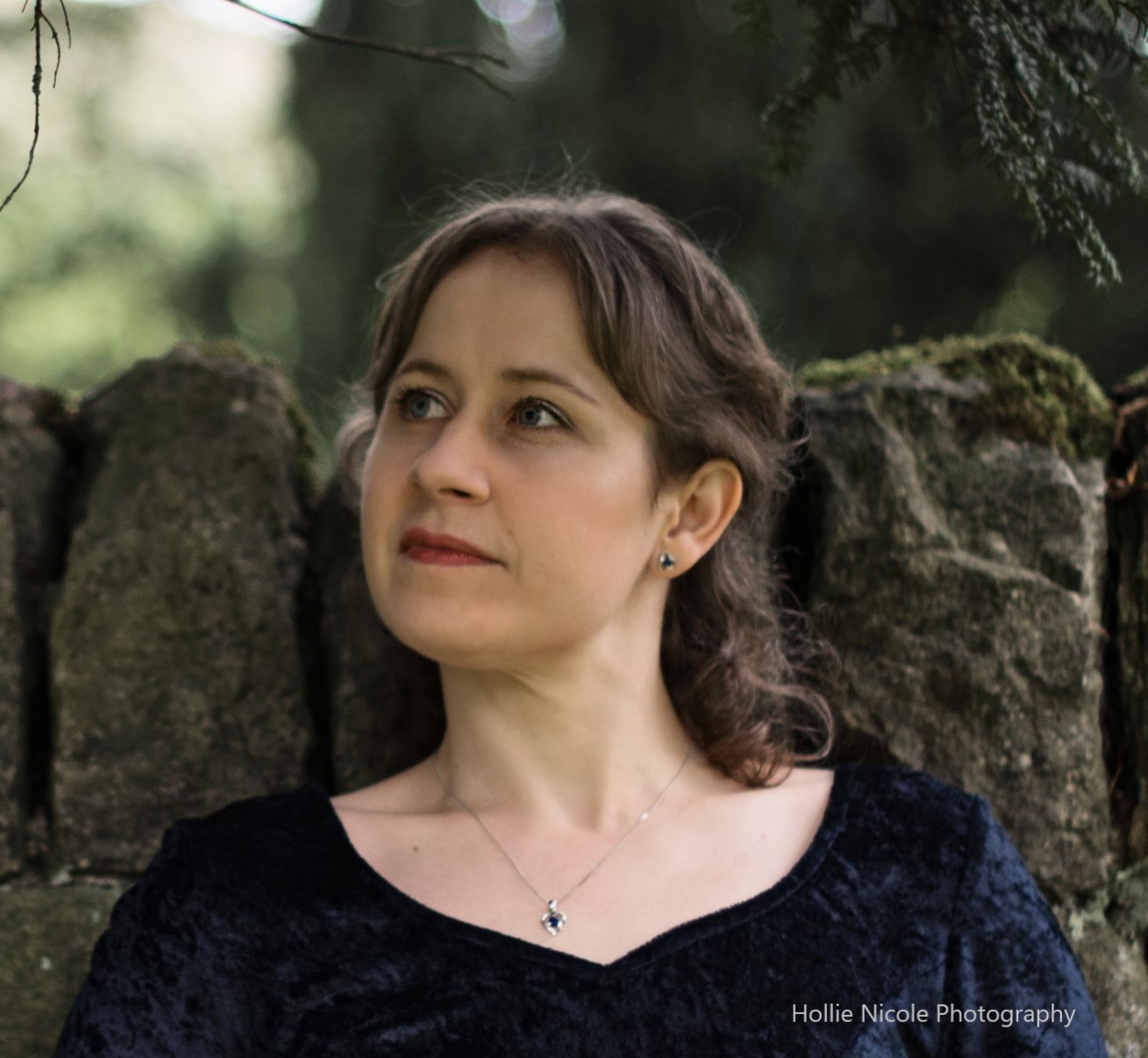
By the way, I’ve just had my annual author photo taken, courtesy of Studio Genti, Lushnje, Albania. What do you think?

O For 6,000 Hymns to Sing! 

30 May

I just got my copy of the June edition Christianity magazine through the post this morning, because I have an article on the Wesleys in it.

John and Charles Wesley had very interesting and effective lives – especially the indefatigable John, although I get the feeling that I would have much preferred Charles, if I had known them. 

Charles wrote a bucketload of hymns, of course, including O! For a Thousand Tongues to Sing (as you probably gathered from the title), and the one currently on repeat in my brain, Love Divine All Loves Excelling. If I have managed to get one of his hymns stuck in your head, too, do comment and let me know which one 😉 

Anyway, the magazine should soon be in sale in larger newsagents, if it’s not already, or you can subscribe online. You can even get a copy free, if you’re not a subscriber yet. There’s an interesting-looking article on purgatory (I haven’t read it yet) as well as my own work and usually lots of other good stuff, so you may as well. 

Enjoy! 

The Archaic Smile

15 Apr

Just a quickie to say that my short story ‘The Archaic Smile’ has been published on The Ogilvie literary review. It is free to read online, so go and have a look.

The story is about an archaic kouros – that’s a type of Greek statue (like the one in the picture to the left), but it is more eventful than you might think for a story that has a statue as its hero. The Ogilvie said it had ‘subtle prose and artful suspense‘ so really, go and read it!

Rio’s Hug

10 Aug

This blog post is simply going to direct you to another blog post, on Premier Christianity‘s website. But no, I’m not being lazy, because I wrote that post too.

If you have seen the statue of Christ the Redeemer on your TV during the Olympics, and want to hear my musings about its significance, and how it connects to the Games, please do have a wee read:

Christ the Redeemer: Why Rio’s statue is the true God of the Olympics

2199847917_266917357b_b

Photo: Paul Mannix

The compassionate embrace includes everyone, from Olympic athletes to drug dealers, from top politicians to favela kids.

Are you a dangerous woman?

11 Jul

Did you know Cleopatra had a sister? Quite possibly you have never given it any thought, but in my research for the novel I’m working on (and which I will finish this year), The Gates of Janus, I have bumped up against Cleopatra’s younger sister, Arsinoe. She only turns up in the odd line in Strabo, Cassius Dio and Appian, but they are throwaway lines that are suggestive of a fascinating life that lies behind them.

So when I saw that the Dangerous Women Project was open for submissions, I thought I would really like to shed a bit of light on “The Other Ptolemy Girl“. (Yes, I totally lifted that title from Philippa Gregory.)

If you would like to learn a bit more about Cleopatra’s little sister, and how these siblings were both dangerous in their different ways (I’m glad I wasn’t born into that family), head over to the Dangerous Women site. The current submissions period is open until 7th August 2016, so if you have some views on dangerous women, too, why not submit your tuppenceworth as well?

Summer Sale and Author Interview

1 Jul

Smashwords is having its summer sale throughout the month of July, and my books Office Life (and Death) and A New Year’s Trio will be included, so you can read them for free! (If you haven’t already.)

Smashwords is an ebook shop where you can download books in all the normal ebook formats including mobi (for Kindle) and epub (for all other ereaders). Or you can just read them right there on your computer screen.

As part of the promotion they’re getting authors to do “interviews”, where we write the answers to various questions we are presented with. I’ve just done mine, so if you want to find out what my writing surface looks like (you’re dying to know, aren’t you?) or what my favourite book is, you can pop over and read the interview.

However, it’s not all about me: this is where you come in. If you want me to answer a question that is not covered in the author interview, let me know in the comments section below and I can easily add it in. 🙂

Julian of Norwich – not called Julian, probably not from Norwich

18 Jun

Juliana_of_NorwichMy Ten-Minute Guide to Julian of Norwich (the medieval mystic) is available in the July edition of Premier Christianity magazine, available at larger newsagents and online.

Obviously I couldn’t cover every aspect of her theology in a short article – although I could cover every known aspect of her life, since there are precious few of them. Anyway, if you want to learn more about the first (known) female English writer, and why she believed”all shall be well”, you could read her Revelations of Divine Love – or you could just cheat and read my article 😉

UPDATE: Now that I have received my copy, I see that my article on adult colouring books is also in the July edition. This means that I have written about 10% of the magazine this month, a fact that tickles me quite a bit 🙂

The Stay-at-Home Missionary

28 Feb

It’s not often that I am moved to blog about a sermon I hear at church (though it does occasionally happen). Today we had a visiting speaker, Aaron Elder (who, despite his name, was almost unbearably young), and some of the things he said particularly struck me. That makes it sound as if our regular pastor’s sermons are not striking, which is unfair. They are often excellent, usually challenging, and if they suffer from using the phrase “what would it look like” more often than is warranted by normal use of the English language, well, so do Aaron’s. But maybe I was just ready to hear what Aaron had to say today – or, more accurately, what God had to say through him, because in any really good sermon the mouthpiece fades into the background.

Anyway, Aaron’s sermon was mainly about missionaries, and how we are all supposed to be missionaries. He dropped in some quotes by big hitters (he was almost apologetic by the time he invoked Kierkegaard; I was ready to cheer) and one of them was from Charles Spurgeon:

Every Christian is either a missionary or an imposter.

Of course this is hardly a new concept. I’ve heard any number of times the idea that we can’t all go abroad to be missionaries, but we can and should all spread God’s message of love where we are. I probably have a slightly different angle on this from most people, having been a missionary abroad; when asked what our mental picture of a missionary is (as a precursor to telling us we’re all missionaries), I think about my former friends and colleagues – although I have to admit that this image fights for space with the stereotypical image of a middle-aged woman in sensible clothes and besandaled socks.)

Anyway, when we were all being encouraged to think of where our ‘mission field’ is, I was, not for the first time, thinking “I don’t have any colleagues. I don’t have many friends, and many of the ones I do have are overseas.  I see my neighbours rarely. I don’t have a mission field.” Most people have to deal with a lot of people every day, whether they want to or not, but my work is just me and a computer, and that’s the way I like it. Even when I’m interpreting Albanian, I’m only supposed to be a human version of Google Translate (albeit a more accurate one); I’m not allowed to interject my own thoughts, any more than a Babel fish does.

However, while I indulged in this none-too-positive thinking, God* suddenly drew my attention to the fact that in a few weeks I’ll be speaking to over 200 people about St Patrick. In the week of St Patrick’s Day I’m visiting a school, talking to the whole of S1. Then I’m giving a talk on “Who was the real St Patrick?” at Govanhill Neighbourhood Centre the same week, on Friday 18th March. Neither of these talks are going to be evangelistic – I’m not luring people in and then preaching hellfire and damnation. But I will be speaking about another missionary, good old Pat, and mentioning why he went off to serve the Irish – which was of course because of his belief in God, and that God had sent him.** So while I may not have colleagues, or even many friends (don’t shed any tears, I do have some, and they are lovely!), I have a remarkably privileged opportunity that most people don’t get. Of course, I’ve also got my books, read even by people I’ve never met (so I’m told), so there’s a lovely, arm’s-length mission field – a Christian introvert‘s dream 😉

Where am I going with this? Nowhere really, except to observe that sometimes things can become new and fresh even when we’ve heard them a hundred time, and that perhaps even I have a mission field, even if it is limited in time, or extended in virtual distance.

__________________________________

*How do I know / why do I think it was God? It’s hard to be 100% sure when it comes to divine communications, but they do happen (if you’re a Christian), and they come in a number of different forms, from the unsettlingly supernatural to the surprisingly mundane. In this case, while mundane, the subject came to my mind unbidden, and in a completely different light from how I had seen it before, while I was in a prayerful, open attitude. That doesn’t prove anything, but I just thought I would explain since “God spoke to me” can be a rather confusing and ambiguous statement for the uninitiated.

** In his case it was a vivid dream in which he received a letter from the Irish – a little closer to the supernatural end of the scale.