I’m just back from what my sister called my “overseas tour” – speaking to a literary society on the Isle of Bute. Continue reading
I’m just back from what my sister called my “overseas tour” – speaking to a literary society on the Isle of Bute. Continue reading
Next week I’ll be travelling to Robin Hood’s heartland which is, of course, Yorkshire!
On this mini-book tour I’ll be speaking to the sixth formers at my old school, Sheffield High, but I’ll also be doing a public event at Stannington Library. Stannington is a suburb of Sheffield that is still almost like a village, and is conveniently close to Loxley, of Robin Hood fame.
It’s on Tuesday 12th of February at 7pm, and it takes the form a discussion between myself and a storyteller called Carmel Page, who has written fictional stories about the young Robin Hood.
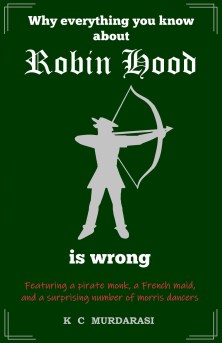
Entry is free, but as it’s a volunteer library, donations are encouraged. I will also have copies of my book Why Everything You Know about Robin Hood Is Wrong available for sale.
There’s a PDF of the event poster here, which you may share as widely as you like, and there’s this adorable wee gif that Stannington Library created for me. (If it doesn’t play automatically, try clicking on it.)

By the way, if you have an idea of an author event for me, or would like to invite me to speak to your school or organisation, please don’t hesitate to get in touch using the “Get in Touch” section (obviously). ➡️
 In the latest edition of Premier’s Christianity magazine you will find my “Ten-Minute Guide to Isaac Newton”.
Why would Isaac Newton be featured in a series of short guides to figures in church history? Because he had some wacky, but sincerely held, theological views. Although he’s best known for dabbling in maths and physics (you may have heard of one or two of his wee laws of motion that revolutionised the science of the time), his real passions were biblical criticism (especially trying to construct a universal chronology of all human history after Noah’s flood) and alchemy.
While I was researching this article I also happened to be reading Somerset Maugham’s brilliant novel, The Magician. The result was that I quickly became deeply fascinated by the history of alchemy, to the extent that I want to write a book on it someday.
Apparently not everyone shares this fascination, because one of the boxes I had written to accompany the article, about alchemists who were also Christians (or Christianish, in Newton’s case) was cut in favour of some interesting Newton quotes. That’s not anything unusual. When a book is edited, you spent time going back and forth with your editor discussing and negotiating changes; when a magazine is edited, time pressure means that you only find out afterwards.
However, you lucky people who follow my blog can still enjoy the deleted box! Here is a rundown of some of famous Christians who also dedicated themselves to the pursuit of the philosopher’s stone.
 Morienus – Christian hermit who introduced alchemy to the Islamic world.
 St Dunstan – abbot of Glastonbury and later Archbishop of Canterbury. A work on how to produce the philosopher’s stone is attributed to him. [Although to be fair, it could all have been false accusations by his enemies. But he was awfully good at metalwork, which is associated with alchemy. Just sayin’.]
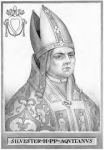 Pope Sylvester II – French pope who was deeply interested in arts and sciences, including alchemy, and helped to introduce Arab knowledge to Europe.
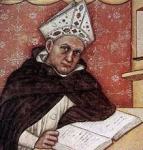 Albertus Magnus – Dominican monk who taught Thomas Aquinas and spent 20 years setting down in Latin the knowledge of every branch of learning that existed.
Each of these men is fascinating in his own right, and well worth looking up. Or if you’re feeling lazy you could just wait, possibly several years, until I write that book I mentioned. But don’t wait years to read the article on Newton – it’s only available this month, and if you’ve never subscribed to Christianity before, you can even get a free trial copy.

When I was preparing my new book, Why Everything You Know about Robin Hood Is Wrong for publication, I initially intended to have an accompanying image in each chapter. I ditched the idea, mostly because it would make the book to expensive (always thinking of you, my dear readers) but I thought you might like to see them anyway.
So in this blog you will see the pictures that would have been in the colour edition of the book, in order, along with their original captions. They may not make total sense out of context. To fill in the blanks, you will have to read my book – which is released tomorrow! (22nd November 2018, that is.)
(By the way, most of the images in this post are licensed for resuse, but not all. Check the caption for the origin if you plan to reuse them.)
Continue reading
After much to-ing and fro-ing, the book launch for Why Everything You Know about Robin Hood Is Wrong is set for Saturday 24th November at the Virgin Money Lounge in Glasgow, on the corner of Royal Exchange Square and Queen Street. (Here’s a handy map.)
 Because if you are, you could enter my Twitter prize draw to win a copy of Why Everything You Know about Robin Hood Is Wrong before it’s released! And five runners-up will win an .epub copy. Enter by retweeting this tweet and following @kcmurdarasi. See the terms and conditions, if you’re having trouble sleeping.
On the other hand, if you’re not feeling so lucky, there’s a more certain way to get your hands on a copy. Everyone on my mailing list will receive an .epub copy when the book is released on 22nd November (or as soon after that as I manage).
But what if you don’t feel lucky and you still want a paperback copy? Then you can pre-order it, like everybody else, can’t you? Do I have to do everything for you? 😉
 I have been feverishly scanning the internet for signs of my forthcoming book, Why Everything You Know about Robin Hood Is Wrong, and it is now listed as available for pre-order on Amazon! It doesn’t show my uber-stylish cover yet, but that should follow in due course.
You will be able to get copies from me, of course, by dropping me a line using the contact form to the right, or by coming to a book event (more details to follow), but it you prefer the convenience of Amazon you can pre-order now. You can pre-order from your local bookshop, too, or ask your local library to stock it. Speak to them; people who work with books are generally nice. (Except the baddie in my current novel, but that’s another story – literally.)
 My other news is that Create Work Earn has just been published. This is a book about freelancing and creativity. It’s compiled by Vivienne K Neale, but I have a chapter on portfolio careers. What is a portfolio career? Read the book and find out! (Or you could just Google it; it’s not hard.)

Miss Rabbit – the ultimate portfolio careerist
As I obviously have oodles of time on my hands, trying to finish a novel (The Sarcophagus Scroll) while simultaneously preparing a non-fiction book for publication (Why Everything You Know about Robin Hood is Wrong), this must be the perfect time to host a question-and-answer time on AMAfeed (Ask Me Anything).
Anyway, whether I am superhuman, or thrive on challenge, or am simply mad, I have scheduled the Ask Me Anything for Tuesday 11th September at 2.30pm, UK time. You can post your questions before then (and I can answer them), but they won’t show up until Tuesday afternoon.
If you know anyone who’s curious about the business of writing professionally, encourage them to pose a question for me. If it throws up anything interesting, I may post the link again once the Q&A has closed.

The latest edition of Premier Christianity magazine features my article on Thérèse of Lisieux, a French nun who had the quickest canonisation of anyone in the Catholic Church up to that date. (Canonisation is being declared a saint, in case you’re not up on the lingo.)
This the article that I mentioned was bumped from the magazine because of Billy Graham’s death, and then leapfrogged by my later article on Richard Wurmbrand. But Thérèse would have loved that. She was self-effacing to the point of being completely self-negating. Her ‘little way’, as she called her philosophy, was about denying every self-focussed impulse, however justified it seemed, and instead living a life of sacrificial love for others, to the greater glory of God.
I found the story of Thérèse of Lisieux challenging. The first challenge was learning how to spell her name, of course. But more seriously, her absolute denial of self makes you question your own ‘reasonable’ level of selfishness. When she was dying of a painful illness, those who didn’t know her well thought that she couldn’t be seriously unwell, because she was so uncomplaining. I am not that uncomplaining, to put it mildly.
I didn’t agree with Thérèse on everything. I think she took self-negation too far, to the extent that she thought it might be wrong for her to enjoy the beauty of God’s creation (specifically the scent of flowers). But there is undeniably something to strive towards in her determination “to appear happy, and especially to be so”, despite the worst of personal circumstances.
You can get a copy of Christianity magazine for free, but if you subscribe at the moment you get the first year at half price (making it less than twenty quid for the whole year), and you’ll be entered into a draw to win £200-worth of Christian books!
Of course, if you want to follow Thérèse’s example, you’d better hope that you don’t win the books. But don’t worry, if you do win them, you can just give them away. 😉