Archive | Random Thoughts – mildly humorous RSS feed for this section

Toilets I Have Known (on a scale of one to ten)

9 Mar
The Trainspotting Toilet - about a three.

The Trainspotting toilet – about a three.

I have a rather idiosyncratic approach to toilets – so much so that a friend suggested I share it on my blog. I’m not referring to the way I use toilets, which is entirely normal. (Athough really, in the privacy of the cubicle, who knows what is normal?) No, I’m referring to the fact that I award them a score on a ten point scale.

This is just public toilets, I should probably say. I’m not going into people’s houses, wrinkling my nose and saying, “No better than a six,” like some contestant on a lavatorial version of Come Dine with Me. However, when using a toilet in a public place for the first time you might well find me doing that.

This started as a coping mechanism in Albania. In the less developed parts of the world you are far more likely to find toilets that I would consider to be on the lower end of the scale, and using them can be quite a trying experience. To help, I would assign them scores, which is not only a distraction in itself, but also reminds you that it could be worse.

So what are the criteria for scoring well on the WC scale? It’s partly subjective, but here are some of the basic elements that score a toilet points: a door that shuts; a lock on the door; a light source; the ability to flush; toilet paper, and somewhere to dispose of it; water to wash your hands, preferably running; soap; a method of drying your hands; a hook (see my post on disabled toilets); a mirror; an inoffensive smell. Extra marks can be gained for having such luxuries as hand cream, aesthetically pleasing decor and floor-to-ceiling cubicle doors.

Some of these seem pretty essential, do I hear you say? You’d never find a toilet without them? Oh yes you would, and I have seen facilities missing all of these things, though usually not all in the same toilet.

So let’s examine both ends of the scale. Although in Britain you wouldn’t expect to find less than a 6 at worst, it takes something special to reach the perfect 10. Toilets in art galleries and beauty salons often score 9s or 10s, as do posh restaurants and hotels, but possibly the nicest I have ever seen is in The Blythswood Hotel in Glasgow. I may not like their attitude to ordinary working folk, but I can’t fault their toilets: a haven of peaceful salubriousness, with restful lighting, lovely fittings, and tiny single use hand towels that you throw in a basket afterwards. Bliss – definitely a ten.

What about the other end of the scale? What kind of a toilet scores just one? Are you thinking of the filthy loo in Trainspotting? No, that’s about a 3. Disgusting as it was, it had a door (that locked, I think) and sinks to wash your hands. The toilet in Slumdog Millionaire, then? Again, no. It had a door and someone to guard it. I think there may even have been paper. It would score at least 2. So is it possible to score only 1? Yes. I have seen the worst toilet in the world (I believe). It was in Albania, I think in Erseke though it may have been Leskovik. It was a hole in a concrete floor above a river. The room had three concrete walls; the fourth side was entirely open to the road, from where I observed it. I did not use it. That’s how you get a 1. So the next time the loo roll has run out or the hook is broken, think of Erseke, and be grateful.

Nature and Nurture

15 Dec

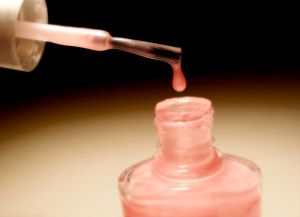
Pink Nail PolishHave I created a monster? (Although if I have she would be the cutest, most adorable kind of monster you could imagine.) My 21-month-old niece is the girliest girl possible, and I fear I may have a lot to do with it, since I look after her three days a week and she sees me putting on makeup, using various lotions and potions, wearing high heels etc. She insists on copying me, putting on pretend make-up and real hand cream, and picking out high-heeled shoes for me to wear even when the weather, and carrying a two-stone toddler, would make them quite impractical. She loves playing with my handbag, which keeps her amused for minutes on end. (That’s pretty good, with a one-year-old.)

But I don’t think I deserve all of the blame for this. Her mother would have to take a portion too, since my niece often comes to my place smelling of mummy’s perfume and dressed in very cute outfits, but that’s not what I mean. I don’t think this girly obsession is entirely due to her upbringing at all. I think pink blood runs in her veins, so to speak. I know it’s easy to fool yourself that you’re not imprinting gender stereotypes on your kids when in reality you are, without realising, but I have good evidence that there is something deeper. For instance, she’s obsessed with handbags, and often goes after other people’s on the train (I really must train her as a pickpocket). She’s also fascinated with painted nails. Now I rarely paint my nails and, as I’ve written before, I’m just not that into handbags. She’s not getting that from me, and I don’t think she’s getting it from my sister, either.

The thing that decided me, though, was watching her with my husband yesterday. She adores her uncle, and follows him round watching what he does – but she doesn’t copy him. She doesn’t want to put shaving foam on her face or gel in her hair. When I use deoderant she’s after me for the bottle to pretend to spray it herself, but when he does, she’s content to watch. (So am I. He has the body of a Greek god.) In other words, she knows she’s female without being told, and knows that mummy and I are too, so she models herself on us and other women. This is not conditioning, this has to be inbuilt.

Actually, she’s not as much of a girly girl as this post makes her appear. She’s also quite tough and loves being tossed into the air or chucked on the bed, and as well as handbags she likes to carry all sorts of other bags and containers, some of them very heavy. She’s also taken recently to sticking her finger up her nose, which I consider very unfeminine. Of course, children go through phases and in ten years’ time we may be laughing at the fact that she was every girly. She has a baby sister on the way now, so it will be interesting to see how that affects things, for both of them. In the meantime, I’ll just keep a wary eye on my blusher.

Sightly Thoughts on Gruntlement

31 Mar

Many years ago, during English Language A-Level, a friend and I began thinking about words that have no positive equivalents. Unintentional, for instance, corresponds to intentional, but what does unsightly correspond to? I’ve never heard anyone describe anything as ‘sightly’.

The list is longer than you might think. It all started with disgruntled – a great word in itself, but wouldn’t gruntled be good, too? Ruthless and reckless attracted our attention as well. The Government should be running a campaign urging us all to drive reckfully.

A lot of these are what called fossil words – words that are preserved inside other words, in this case their negative versions. Reck, ruth and gorm used to actually be things, and people would use them in sentences, but they have died out, leaving only confusing traces in reckless, ruthless and gormless.

The issue sprang back to mind many years later because someone on the radio ticked Madonna off for singing “nothing’s indestructible”, criticising the phrase as a double negative. Leaving aside the fact that the criticism was based on a misunderstanding of the double negative rule (which is itself a silly rule), what was she supposed to have said? “Everything is destructable”? Is that a word?

Below is the list of these positive equivalents that are never used, as far as I know. It is nowhere near exhaustive and suggestions for additions will be considered ruthfully.

(The friend, by the way, was Kerry Smallman, who these days produces weird European house music,  and very good poetry, if you want to check it out.)http://www.myspace.com/kerryandcasio

AdvertantGormful
AimfullyGruntled
Card (as in discard)Gusting (As in disgusting, not as in wind.)
ChoateHapless
CombobulatedKempt
ConcertingMolish
CouthMoralised (as an adjective)
DefatigableNominious
DestructablePointful
DignationPudent
DisestablishmentarianismPunity
DolentReckful
DupitablyRuthful
EffableScathed (although we do have scathing)
EluctableSightly
ErtSolent
EvitableSouciance
FeckfulVincible
GainlyWieldy

Norn Arn

6 Jan

Nuala with the Hula, Belfast (Ardfern)

I spent New Year in Norn Arn. For anyone who doesn’t know, that’s Northern Ireland in a Northern Irish accent. Alternative spellings are Norn Urn and Norn Iron. It was my first time in that part of Britain, so I thought I’d record my impressions, for what they’re worth.

The thing that struck me most was the different attitude to personal space. It’s not that people crowd you, it’s just that don’t have that automatic impulse to move aside when someone else comes too close or tries to get past. Weaving my way to the toilet after church I had to push through knots of people who didn’t seem the least bit awkward about it. When I got to the other side I realised that part of the reason it was so crowded was that a third of the room was empty; people were huddled like emperor penguins.

In some ways Norn Arn is a lot like Scotland, but a notch or two up: the weather is terrible, worse than Glasgow; the people are very hospitable and keep plying you with food; and they seem to have the same sort of humour when it comes to giving nicknames to landmarks – the Balls at the Falls and Nuala with the Hula, for instance.

In other ways it’s nothing like Scotland, or like my part of it anyway – hence the fact that we were at church bright and early on New Year’s Day when all sensible people are in bed. The church was lovely and the sermon was inspiring, but I couldn’t get over the fact that every pew was full at 10.30 on New Year’s Day.

The day I returned (the day before the big storm, fortunately, or I wouldn’t have been going anywhere), we went to Belfast, the capital. Belfast seems like an odd mixture of Dundee and Prishtina (which is not meant as an insult – there’s nothing wrong with Prishtina). Up close it’s much like every other major city, apart from the amazing profusion of craft shops. You will usually find one or two in a city, though you’ll have to search for them, but in Belfast they’re dotted all over the city centre. There’s even a shop dedicated to beads.  So I suppose if I ever do get stuck in Belfast because of the weather, there will at least be plenty to keep me occupied.

Defraging the Year

9 Dec

You may be aware that Scotland has a lot of weather. A lot of weather. We don’t just have North Sea oil wealth, we are also rich in rain, hail, sleet and snow – although, contrary to popular belief, we do get some of the more pleasant kinds of weather, too.

The trouble with weather in Scotland is not so much the type or the quantity, it’s the distribution. We can and do get snow in June, warm sunny days in November, and rain just about anytime with only a few minutes’ notice.

This year has been a particularly apt example of the uneven distribution of Scotland’s weather, which led some colleagues and me to a helpful conclusion: you could make a perfectly good year of weather out of 2011 if you could just rearrange it, so what we need is a defragmenting machine.

In computers, you use a defraging (defragmenting) program to rearrange things stored on the memory into a more sensible pattern, in order to save space. We could do the same for weather, moving all the sunny days together to make a decent summer and putting all the snow and sleet in deepest winter where it belongs. If we can only work out how to defrag time we will have four defined seasons full of perfectly acceptable weather. But I think ‘Hurricane Bawbag’ could go straight into deleted items.

Constant Corriecraving, or The Awkwardness of Almost Strangers

18 Nov

I have a problem. It doesn’t blight my life but it does create regular moments of social awkwardness. I pass the same guy on the way to work most days, and sometimes on the way home, too. I don’t know him, I know nothing about him, but obviously I recognise him since I’ve seen him several times a week for years. You’d think we’d have struck up an acquaintance over the years. We haven’t. In fact we are condemned to what the Meaning of Liff dictionary would call ‘corriecraving’, without the relief of ‘corriedoo’.

It’s not just him, though. There are all the people who wait at the same small station as me every morning and get the same train to the same destination. I know most of them by sight but etiquette demands that I pretend not to, and we are only permitted to talk to each other when the trains are disrupted.

I once broke this law. In a fit of high spirits after receiving some good news I cheerily wished one of my fellow passengers good morning. Did this break the ice? Did I then have a companion to greet each morning? No, it just made things worse, because then I had to see this incomplete stranger every morning with the added awkwardness of knowing that I had once wished him a cheery good morning. Luckily for me, he soon moved away.

As for my corriecraving companion, that problem should soon be solved, too, since I’m leaving that place of work. Not because of him, of course, but it won’t be one of the things I’ll miss.

The Breeding Habits of Biros

13 Nov

In 1935 Ladislas Biro journeyed to South America. There, in the wilderness of Argentina, he discovered a species of worm previously unknown to the Western world. Hard shelled and secreting a thick, dark slime, it was considered merely a pest by the locals, but Ladislas could see its potential.

Ladislas rushed back to Paris and lodged a patent for his new ‘invention’. Soon, the world was introduced to the Biro, a new kind of writing implement that wrote (or rather, left its thick, coloured slime) on almost every surface, and worked constantly, without refilling, for up to two years – that being the average life cycle of the Argentinian worm.

Mr Biro was no fool. He understood that if people discovered the true nature of the new pens, not only would he be a laughing stock, but people would simply breed the worms, and there would be no more income to be had from export. He thought the risk was small, however; Biros were both expensive and reliable. Why would any household have more than one? Even if they did, what were the chances that they would have both male and female, and would keep them together for any length of time?

Ladislas’ gamble paid off, and he lived out the rest of his wealthy life without discovery. Those who came after him, however, were not so cautious. Greedy to expand they lowered the price and flooded the market. Soon people were giving away specially bred sloganed versions for free, and betting shops were importing a dwarf variety by the thousand, and what Ladislas had feared came to pass: Left alone in drawers, desk tidies and pencil cases, the worms started to breed.

Ladislas Biro had anticipated an outcry, investigations, the ripping up of his patent and mass breeding programmes, but none of this came about. Instead people merely shrugged, said to themselves “I must have picked up another free one without noticing”, and went on with their lives, resigned to always having too many Biros. Around the world, Biros bred prolifically, rearing their young in the nooks and crannies of modern life, and mankind went about its business in total ignorance – until now.


Liked this? Try Office Life (and Death), a collection of funny short stories.

The Joys of Dyslexia

19 Jul

Tom Pellerau, who astonishingly won The Apprentice despite being a nice chap, was talking on “You’re Hired” about how his dyslexia had been a boon to him, allowing him to turn around inventions in his mind, a thing that other people don’t seem to be able to do. I can’t do that either, since dyslexia is a very flexible disability which varies from person to person. However my own dyslexia does provide some benefits – chiefly, the amusement I get from hastily glimpsed signs.

The dyslexic brain often grabs at the shape of words rather than reading all the letters, which means (out of context) I have the ability to misread things more dramatically than the average person.  Here’s a selection of my favourites:

Eat your peas = Eat your pets

Trinny and Susannah = Tyranny and Susannah

Gordon Street = Gorilla Street

Providing life-changing services to people with sight loss = Providing for the vices of people with sight loss

What’s on this month = What’s on the moon

Ignite your imagination = ignore your neighbours

Recycle your batteries here = recycle your enemies here

Krushems = blaspheme

coffee shop = chlorine

Experience the wisdom of the OT in a new way = Experience the wisdom of the OT in a new wax

The Bible played a central role in Calvin’s life and work = The BBC played a central role in Calvin’s life and work

The premium computing organisation = The power of composting organisation

cafe and picnic area = cafe and piñata area

2 for 1 dining = 2 for 1 dripping

tapers in Universal Credit = tapas in Universal Credit

serviced offices = sacred offices

catalogue specials =  cast a spell on us

celebrating fine coffee = celebs rating fine coffee

reduce arrears = reduce Andy to tears

Special Promotional Rates = Suicide Promotional Fares

Who will you back? = Who will you kill back?

Salsa and Salsacise classes = Salary and Sausage classes

Touch Blue Telecom = Touch the Blue Pelican

Fasten your seatbelt = Fasten your breakfast

Recruiting mechanics now = Recruiting maniacs now

FedEx = Feck it

Putting customers at the heart of everything we do = Putting cushions at the heart of everything we do

A&FNY = Agent Firefly

Internal management plans = Infernal management plans

Baggage reclaim = try to remain calm [particularly apt, I think]

The cosy poncho = The cosy psycho

Bifocal contact lenses = Biblical contact lenses

Professionally formulated with argan oil = Presumably formulated with argan oil

liposuction = lapsang souchong

Welding engineers = Wedding emergencies

Sit-in restaurant meals = Sit in respectable schools

14 days of unmissable tennis = 14 days of unspeakable tenor

Kirsty and Phil’s Love It or List It = Kirsty and Phil’s Love Child

We’ll buy your car = We’ll eat your car

To Let = Too Late

Do the right thing for your retinas = Do the right thing for your victims

So you want to win the Eurovision Song Contest?

13 May

How to Create the Perfect Eurovision Entry

So you want to enter the Eurovision Song Contest? Here are a few guidelines for producing the perfect entry which will wow the crowds in any of the capitals of little-known European states.

1) Choose a theme. This should ideally be love or peace, or both. Hope, unity and celebration are also acceptable. If singing about unity, make sure you throw in a few phrases in various European languages to show that you’ve made the effort. If, however, these themes are a bit too saccharine for you, it is acceptable to sing about plain old-fashioned sexual attraction. In this case, try and make sure your main singer is reasonably attractive, otherwise it could backfire.

2) Choose your singers. It’s best if they can sing, but don’t worry if they can’t – each year there are a number of entries which are not held back by having tone-deaf performers. Your singers should be as attractive as you can find (unless you’re going for a humorous entry, in which case they should look much like flesh-coloured gargoyles). For the males, try to choose pretty boys rather than ruggedly handsome men. If you can find totally androgynous ones, so much the better, as it will be very effective in the …

3) Costume changes! It is a requirement of the contest that you either have a costume change or outrageously bizarre costumes, but ideally you should aim for both. If you can manage two or three costume changes, even better, but don’t have any more than this as your singers will start off looking like the Michelin man, and there won’t be any time to sing the song. Try to change women’s clothing into men’s and vice versa, which is particularly effective if you have androgynous singers. Make sure there are contrasting colours; your costume change should take less than two seconds, and you don’t want audience members to be unaware that it has taken place if they blink during the crucial moment.

4) Add something extra. Usually this would be an ethnic dimension. This works best if you come from a country which still has a strong national culture and dress, or is so little-known that you can pretend it does without being found out. The ethnic dimension works especially well if used for tragic effect, but this should only be attempted if your country has suffered war, oppression or a significant natural disaster in the last 10 – 15 years. If you come from, for example, Switzerland, you will only lose the audience’s sympathy and try their patience. If the ethnic thing doesn’t work for you, you can also try the weird / gothic angle (although this has been overused in recent years), enter a humorous piece (but be aware that humour doesn’t always translate) or, unconventionally, present a good song sung by a talented singer. If none of these options is available or appealing, you can always go for the old fall-back – a pretty girl in a very short skirt.

Good luck, buona fortuna and paḉ fatë with your entry!*

*Please be aware that these guidelines cannot guarantee a good result in the Eurovision. For that you will need several land borders and political or ethnic ties with further-flung neighbours. If you are serious about winning, please consider moving your country to the Balkans or the former USSR.

UPDATE: Since this post was written, the wonderful “Love Love Peace Peace” was released, a scientific distillation of all the crucial elements of a successful Eurovision Song.

Consuldictation

22 Jan

Consuldictation (noun): A process whereby someone or some people (usually in management) dictate a change (usually negative) which is about to take place whether you like it or not, but present it as a “consultation” so that your frustrated opinions can be heard, though not acted upon. It seems to be happening a lot these days.