The time of your life?

18 Nov

Even as I sit down to right this post, I am thinking Do I actually have time to do this? I have to remind myself forcefully that the answer is yes, yes I do. I don’t have to check my emails again – they do not evaporate if I don’t look at them within twenty minutes; I don’t have to clean the mirrors (well actually I do, but not right now); and I absolutely do not have to check if I have any new activity on Facebook or Twitter. Those are both vaguely work-related, by the way (most things are if you’re an author), but not urgent or even essential.

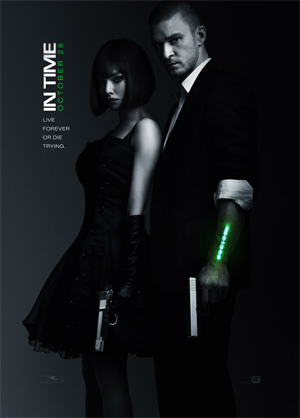
In Time - an interesting take on extreme time pressure.

In Time – an interesting take on extreme time pressure.

The thing is, I feel like I don’t have enough time in the day, as I’m sure most people do, but I’m not convinced that I actually spend my time very wisely, or that I assess how I have used it very accurately. I got to thinking about it today because of a BBC article about the new meal-replacement drink Soylent, which can save time cooking and eating. (There’s a case in point – clicking through to online articles from social media can be an interesting, but rarely productive, use of time.) It said that if it was all about saving time, then people would certainly replace meals with a dodgily-named drink (look up Soylent Green if you don’t know what I’m talking about), but it’s not. The writer of the article thinks it’s about excessive busyness distracting us from the human condition. I’m not about to get that deep and philosophical here (although I think it’s an interesting point). I just want to think a little bit about good, bad and better ways to spend time.

As a freelance writer, domestic skivvy (sorry, wife) and occasional jack-of-all-trades, I feel particularly pressed for time because I have so many competing priorities. If I’m food shopping I feel that I’ve got to hurry up because I should be writing. If I’m writing I feel like I should be writing something else, or doing housework, or researching. You can see the problem: whatever I achieve in one category, it means I achieve less in another, so I always feel like I’m catching up. In the last few days I’ve submitted the final draft of a manuscript, finished a chapter of the biography I’m working on and handed in an assignment for a distance learning course, which should give me a glow of satisfaction, but I haven’t cleaned the mirrors (I can see them out of the corner of my eye – I’m not usually this mirror-obsessed) or baked biscuits, so I feel like I have not finished what I need to do. This isn’t a problem of time, I would suggest; it is a problem of attitude.

I think it’s possible to go to extremes in opposite directions, and either push yourself too hard to achieve all of the things you want to do before you die, because time is a finite resource for mortal human beings, or to put these things off indefinitely and get on with day-to-day living, as if achieving what you would like to achieve, or even attempting it, is a foolish dream. It’s not a myth, by the way, that there are loads of people who would love to write a book but have never got round to it; I’ve met enough of them to believe it. The old “what would you like to read in your obituary” technique can be pretty useful if you tend to just drift. But at the same time there’s no point in pushing yourself to extremes, because part of the point of life is to just live – otherwise they might be writing your obituary too soon.

There’s a guy called Ramit Sethi who runs various online courses designed to improve your life and particularly your finances. He actually distributed a video on saving time, which was very useful, and which I will watch again if I get the time 😉 (Seriously, it’s worth a watch. Key insights for me were not to fight against my natural rhythms  – I’m rubbish at mornings – and to work in places, like coffee shops, that increase my productivity.) But what I think is particularly interesting is what he says about saving money, which also applies to saving time. He says there’s no point in cutting out that latte every day, or whatever it is, as most money saving advice says you should. It won’t make that much difference, and you’ll be giving up something you really enjoy for not much reward.

With regard to money, the answer, according to Ramit, is to make more rather than spend less. That doesn’t really work with time (although you can become more productive), but I think his less dogmatic, more relaxed attitude to little pleasures can be applied to the use of time, too. I shouldn’t necessarily cut out all uses of my time that aren’t productive or laudable, because while I might fit a few more ‘worthwhile’ things into my life, it would be less of a life and more of a chore. One of the things I particularly struggle with, from a Christian point of view, is feeling that I’ve got to justify my very existence by working hard. This is not what the Christian life is about, and that’s something I have to constantly remind myself of: I don’t need to do anything to justify my existence, I’m already justified. I think Ramit’s “don’t give up the latte” advice is a useful corrective to this extremism, too.

I’ll leave you with a line I love from the Mumford and Sons song Awake My Soul: “where you invest your love, you invest your life”. That doesn’t sound like a bad way to organise your time. A little of what you fancy does you good, and a little of what you love, or like, turns an existence into a life. After all, wasting time may not always be a waste of time.

Do you believe in ghosts?

25 Oct

“How many of you believe in ghosts?” Tom asks. A few hands go up. “And how many of you think it’s a load of old cobblers?” A few laughs, a few more hands.

“I knew a lad once who didn’t believe in ghosts,” Tom begins…

Ghost Stories UK Volume 1

You can probably guess that it didn’t end well for the lad in that story, but to find out exactly what happens to him you will have to download volume three of Word of Mouth Productions’ new audiobooks, Ghost Stories UK. All the stories have a flavour from one of the nations of the UK. The extract above is taken from my story The Carlisle Ghost Walk, which you can probably guess falls into the English category. There’s also The Child Taker, which is very scary and set in Wales (volume two) and The Glen (volume one), which is my favourite, and is set in Texas. Confused? Well, buy volume one and all will become clear!

Each volume costs £3.99 and is only available for download. There are actually four volumes, but I’m not on volume four, I’m afraid. Word of Mouth Productions is currently commissioning stories for collections in the sci fi, horror and murder mystery genres, and they are keen to encourage new authors, so it’s worth sending them a pitch if you’re trying to get a break.

By the way, The Child Taker was very long, so the audio version is abridged. If you’re curious about what was left out, drop me an email using the contact form and I’ll send you a copy of the original.

Why Morgan Freeman is Not God

7 Sep

Last week at church I learned that Morgan Freeman is not God. This probably doesn’t come as a great surprise unless you have genuine problems distinguishing between films and real life, or you subscribe to the conspiracy theory that Morgan Freeman playing God in the Almighty films is actually a clever double bluff.

The point the preacher was making, in fact, wasn’t so much that Morgan Freeman isn’t God as that God isn’t Morgan Freeman. By that I mean that God isn’t some wise, kind twinkly-eyed man who keeps a fatherly eye on us and gets in touch from time to time to give some sage advice and gentle encouragement. And that might come as a surprise. That’s not to say that God isn’t wise, or kind, or interested in our lives. The problem with the Morgan Freeman view of God isn’t that it’s inaccurate in details; it’s that it suffers from a staggering lack of scale.

It’s this same problem with scale that’s at the heart of people finding the idea of God creating the world laughable. There seems to be this idea that the universe is the ultimate reality, brought into existence (probably) by the Big Bang, and within it there are a group of credulous people who believe that their particular planet, or solar system or galaxy, were made by a divine being that internet atheists so charmingly call the Sky Fairy. That does sound silly, but that’s not what anyone’s seriously proposing.

Instead, try to get your head around a being who created not a planet or a solar system, but time, space, energy, matter, the lot. The one who brought into being all the laws of physics that supposedly make his existence redundant as an explanation of how we got here. The true ultimate reality who not only created everything the exists, but who is the source of all existence, upholds and maintains everything we know (and plenty we don’t) by pure will, and could wink it all out of existence on a moment if he so chose. You probably can’t get your head around that fully. People spend lifetimes pondering the implications of it. But the mere attempt gives you a fair inkling of what the preacher meant by “God is not Morgan Freeman”.

I’m always baffled by people (and I’ve met a lot of them) who believe there is “a god” but don’t feel the need to look into it any further, as if the existence of a creator to whom they may one day have to answer isn’t relevant to them. I’m not one for climbing mountains just because they’re there (not ones that require oxygen or special equipment anyway) but if you really believed there was an all-powerful being with the answers to life and who, rumour has it, is so interested in our lives that he came to live with us and die for us, how, how could you just leave it as merely an interesting fact, like the capital of Peru or the etymology of “treacle” (which is fascinating, by the way)?

In a rather nice bit of dovetailing, this week’s sermon was on how God should be at the centre of every part of our lives, not just a special religious section. It was based on a part of the Bible sometimes known the Shema:

“Hear oh Israel, the Lord our God, the Lord is one.” The passage continues: “Love the Lord your God with all your heart and with all your soul and with all your strength.” The preacher last week also quoted the Shema but, rather impressively, he was able to recite it in Hebrew. Jesus quoted this verse, along with another, “Love your neighbour as yourself”, when he was asked which commandment was the most important. His response was that all the commandments in the Bible follow from these two. Again, you could spend a lifetime of theological study working through the implications of that, but for today, let’s just take it as read.

The point the minister was making today was that Christianity is not just about a fuzzy feeling of “Jesus in my heart”, and nor is it a thing you do on Sunday if you have nothing better to do. Instead, loving God and loving other people should be at the heart of everything we do, say, think and are. As the song says, “that’s how deep it goes, if it’s real“.

I was once in a church service where there was an incidence of heckling. This is rare in church, so it sticks in my mind. A lady stood up and said, quite sincerely, that she believed that God just wants us to be happy. I remember thinking, “No, he doesn’t just want us to be happy. He wants so much more than that for us.” Holiness, for example. Salvation. To be fully known. Love. Joy. Peace. The whole shebang. Once again, it’s not an error in detail, it’s a failure of scale.

It’s sometimes tempting to make up the attributes of God we would like, as if he were a fictional character (played by Morgan Freeman, say). You know the kind of thing: “I can’t believe in a god who would X”; “My god would never Y”; or “God just wants us to be happy (regardless of what questionable things we may wish to do in the pursuit of happiness)”. Fine if you’re making up a character for a film, not so fine if you’re talking about the one and only pre-eminent being who can neither be deleted nor altered to fit in with someone’s dearly-held mental picture. You can get to know what God is like. You can accept what you find, or wrestle with it, or refuse to believe altogether, but you can’t seriously expect reality itself to conform to how you would prefer it to be.

The minister today asked, if you’re keeping God at arm’s length, what kind of god is it you’re keeping at arm’s length? Because the God on whom your every breath depends can’t be kept in his place or just brought in in scenes 6 and 31 for dramatic effect. His place is absolute sovereignty. He is in every scene. He wrote the film. So if the God you believe in can be portrayed even remotely accurately by a twinkly-eyed actor with a gravelly voice, you might want to take a few steps back, and get a better sense of scale.

Note 1: My church puts sermons online, so if you would like to listen to the originals, rather than just reading my musings on them, you can find them here. (31st August and 7th September 2014)

Note 2: Will Self wrote a short story called “Scale” all about losing his sense of scale. It was my first introduction to Will Self, who is an excellent writer, but it is not in any way related to this blog post.

All’s Well That’s As You Like It

13 Aug

My good friend Rebekah Holden (who is the same person as the actress Rebekah Harvey, since actors are supposed to have unique names) had kindly posted guest post by me on her lovely blog. It is a simple, 5-step guide to writing a brilliant Shakespeare comedy. Just add genius. And comedy.

All’s Well That’s As You Like It; How to write a Shakespeare comedy

An Unexpected Guest

1 Aug

One of the things I love about the internet are the random connections it throws up. I clicked through from Twitter to a list about books that are better than the films (as a writer and a film fan that’s the kind of clickbait I’m very vulnerable to.) Of course, one of the things that is very irritating about the internet is the difficulty in finding anything again, unless you’ve bookmarked it, so I can’t give you the link to the list, I’m afraid.

Anyway, there were two books on the list that I hadn’t read. One was Fight Club by Chuck Palahniuk, which I have ordered from the library, and the other one was I am Legend by Richard Matheson. And just like that, I have added a name to my list of favourite authors, because it turns out that this man, whom I thought I’d never heard of, not only wrote the story Somewhere in Time (or Bid Time Return), which I really enjoyed but had completely forgot the title and author of, but he also wrote the screenplay of one of my favourite films, The Incredible Shrinking Man! (Yes, it sounds awful, but it’s actually a very thoughtful and touching film. And the fight with the giant spider is great!)

Continuing the theme of random connections, in the book I am Legend the narrator makes a joke about the last man on Earth being Edgar Guest. Not having the first clue who Edgar Guest was (although I could tell from the context he was probably a wordsmith of some kind), I naturally reached for my smartphone and looked him up. He was a poet, as it turned out, and the first poem of his that I turned up (courtesy of the Poetry Foundation), I rather liked. It’s also a very good fit for the book, in which a man keeps going in almost overwhelming circumstances. So here it is for you to enjoy, and I hope that my blog will also be a source of serendipitous connections in the vast internet.

It Couldn’t Be Done

BY EDGAR ALBERT GUEST

Somebody said that it couldn’t be done
But he with a chuckle replied
That “maybe it couldn’t,” but he would be one
Who wouldn’t say so till he’d tried.
So he buckled right in with the trace of a grin
On his face. If he worried he hid it.
He started to sing as he tackled the thing
That couldn’t be done, and he did it!

Somebody scoffed: “Oh, you’ll never do that;
At least no one ever has done it;”
But he took off his coat and he took off his hat
And the first thing we knew he’d begun it.
With a lift of his chin and a bit of a grin,
Without any doubting or quiddit,
He started to sing as he tackled the thing
That couldn’t be done, and he did it.

There are thousands to tell you it cannot be done,
There are thousands to prophesy failure,
There are thousands to point out to you one by one,
The dangers that wait to assail you.
But just buckle in with a bit of a grin,
Just take off your coat and go to it;
Just start in to sing as you tackle the thing
That “cannot be done,” and you’ll do it.

My heart’s in the Bubble, my heart is not here

28 Jun
St Andrews

St Andrews from the West Sands

It’s no secret that I’m extremely fond of the university I attended – St Andrews, affectionately known as the Bubble, because going there really is like entering a secret, magic world, cut off from this one. I’ve blogged before about the way St Andrews never changes, the bizarre things people say in St Andrews, and the way Latin incantations are used to turn the students into graduates, but I thought I would share someone else’s words about the Bubble today.

The St Andrews Alumni Network recently provided a link on Facebook to the June 2012 graduation address, given by Dr Chris Jones. The comments underneath said things like “this made me cry”, “I can’t get over this” and “I am still BAWLING”. With curiosity, but also a steely(ish) determination not to become easily emotional, I clicked through and read it. The beginning was spot on, the middle was fascinating and educational, and the end – well, I was blubbing like a baby throughout the last paragraph, too.

I know that university is a big part of all graduates’ lives, but it is remarkable quite how much of an enduring influence it seems to have on us St Andreans. I would encourage you to read the excellent address even if you are not a graduate of St Andrews, or indeed of anywhere. It gives you a quick run through 600 years of very eventful history, and some of the fascinating facts might come in handy for pub quizzes. If you are an exile from the Bubble, though – please have a hanky at the ready.

Review of Augustine: The Truth Seeker

12 Jun

Danika Cooley, of the website Thinking  Kids, has kindly written a review of Augustine: The Truth Seeker, giving advice about how it would fit into a homeschooling curriculum. Specifically she identifies these subjects as ones where Augustine would fit in well:

  • Ancient History
  • The Early Church
  • Manichean Beliefs
  • The Donatists
  • The Roman Empire
  • The Fall of the Roman Empire

I don’t actually know Danika, so you can get an unbiased view of Augustine by reading her review. Or better still, form your own unbiased view by reading it yourself! It’s available from Christian bookshops and online (Amazon, Eden, TenofThose, Christian Focus website etc.).

From Here to Remember Me

31 May

I saw the film Remember Me recently. You may have done, too. For some reason now TV is multi-channel and digital, schedulers feel the need to show a film about twenty times over a month. It’s a sweet enough little film, boy meeting girl and family members being reconciled and so on. I got quite into it and watched right to the end – which is where the problem lay.

*SPOILER ALERT* Please don’t read any further if you don’t want to know the ending of Remember Me.

Remember_me_film_poster

The thing is, for no apparent reason, when things are all going swimmingly, the main character, Tyler, dies in the 9/11 attacks. I was a bit nonplussed, and had a wee look on IMDB where I found that the director, Allen Coulter, had intended the film to end with the attacks all along – he hadn’t just run out of ideas and killed the character off, which is what it felt like.

There had been no indication of the date when the film was set, although it was clearly recent or contemporary. Tyler’s father works in an office in New York, but although the inside of the office was shown a few times, it was not until the planes were coming in that it was revealed that his office was in one of the twin towers of the World Trade Center. Perhaps that should have made the ending more poignant and shocking, but it didn’t. In fact it made it slightly ridiculous, like a Monty Python sketch where they got bored and just decided to bring in an explosion or wrecking ball or other distraction.

Interesting, at around the same time, I also had the chance to see From Here to Eternity all the way through. It’s one of those films where everyone has seen one scene (the one in the picture below), but no one seems to have seen the whole thing. I only saw it because I was recovering from a nasty stomach bug and had crawled from my bed of sickness onto the sofa to watch some TV.

The reason I mention the two films together is that From Here to Eternity also has a cataclysmic event at the end, but it’s handled much better.

*SPOILER ALERT* – as before, if you don’t want to know what happens, don’t read on.

From_Here_to_Eternity

In the case of From Here to Eternity it’s the Japanese attack on Pearl Harbour. As with Remember Me, the world-shaking event is not the focus of the film, which is about the rather seedy romances of some soldiers stationed on Hawaii. That’s the first clue, though: soldiers stationed on Hawaii during the Second World War gives an indication that Pearl Harbour is coming, if you care to think about it – but the film is engaging enough that you don’t stop to think about it.

There are other clues, too – the fact that America will probably soon enter the war is brought up a couple of times, and there’s the classic doomed love omen. You know it’s never going to work out, so something is going to go wrong, although you don’t know what. When the attack comes, it’s shocking, but at the same time it feels right, it ties in with the situation as it had been painted. You don’t feel cheated or confused, just a bit foolish for not realising it sooner (or perhaps that’s just me – maybe everyone else gets it a lot sooner).

It reminded me a bit of Cecil Hunt’s advice on solving problems in stories (which I’m sure is in his book Short Stories: How to Write Them, although the specific paragraph is hiding from me at the moment. That book, by the way, is the best and most practical book I have ever read on writing, and I would heartily recommend it.) He says that it’s fine to have the heroine beat the villain through her knowledge of kung fu, for example, but only if you’ve actually mentioned at some point that she knew kung fu, or was taking classes or something. Otherwise you’re left with the much-ridiculed “with a single bound, Jones was free” solution.

Of course, that rule doesn’t always apply. No warning whatsoever can work well for small shocks, as it does in the Final Destination films (a guilty pleasure of mine). Equally, it can be used for humour. In the extremely cool film Swingers, there’s a part where the shy, nervous, awkward hero plucks up the courage to ask the girl to dance with him to a nice safe slow number, and then a jive song comes on. She persuades him to stay on the floor, so he jives away in an understated, shy sort of way, then puts in a few wee turns, then some lifts, and then he’s suddenly the king of the floor, throwing amazing moves and impressing the girl. Afterwards his friends, who are as amazed as the audience, ask him how he could do that and he reveals that he took classes. It’s the “with a single bound” thing, but because it’s meant to be laughable, it works.

The problem with Remember Me is that it’s not meant to be laughable, it’s meant to be extremely sombre and thought-provoking. However, instead of making people think about the effect of 9/11 on ordinary lives, it just makes them think “what, how, huh?” If there had been the odd hint thrown in about the impending tragedy, the audience would have been emotionally ready to accept it, as in From Here to Eternity, but instead they emotionally reject it. Does not compute. Insufficient data.

Keeping the audience in the dark might work for small shocks, but when it comes to big shocks that the story rests upon, it seems that too much surprise undermines the shock rather than increasing it. It reduces it to a clever trick, draining it of all pathos. That, at least, is why I think the ending of Remember Me doesn’t work. You may disagree. Feel free to leave a comment with your thoughts, but be aware that this webpage may explode without warning while you are wri

Whatever Happened To The Leisure Society?

29 Apr

I have to warn readers of a sensitive nature that there are one or two incidences of sweary-words in my friend’s article, but it’s well worth a read.

OK, I never lived through the ’70s so I don’t really know what I’m talking about, but I’ve heard people tell tales of free university education (with grants! Grants!) and social equality, and it fairly makes your eyes mist with longing.

Whatever Happened To The Leisure Society?.

Calling all truth seekers!

23 Apr

You are warmly invited to the launch of Augustine: The Truth Seeker on Thursday 1st May at 7pm in Faith Mission bookshop, Glasgow.

Augustine is being launched as part of a special prizegiving evening (which doesn’t mean they’ll be giving out prizes, it means it’s a chance to buy prizes for children to receive at upcoming church prizegivings) and there’s 15% off books on the night.

There will be drinks and nibbles, a talk about St Augustine and the book, plus a reading and the chance to chat and ask questions. The event will go on till 9pm, but feel free to drop in just for a short while if you have other committments.

I hope to see you there!

Cover smaller